

 en
en  English
 中文简体
中文简体 Español
 عربى
عربى

A reach-in refrigerator is a self-contained, upright cold storage cabinet that lets kitchen staff grab ingredients quickly without leaving their station, and choosing the right one comes down to matching cabinet size, door type, temperature performance, and long-term operating cost to how your kitchen actually works. This guide walks through the buying criteria, standard sizes, installation requirements, energy costs, brand comparisons, and maintenance steps that most product pages skip.
How to Choose the Right Reach-In Refrigerator: A Complete Buying Guide
Start with three questions before looking at any spec sheet: how much floor space do you have, what will you store, and how often will the doors open during service. A single-door unit near a prep station that gets opened every few minutes needs a different build than a two-door backup cooler that's accessed a handful of times per shift. Budget matters too, but the purchase price is only part of the equation — energy consumption, repair frequency, and warranty coverage all add up over a 10 to 15 year service life.
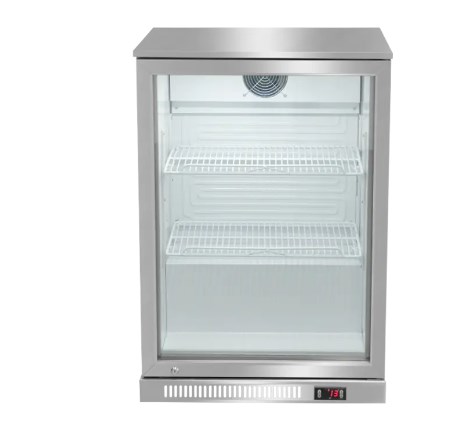
Door type is the first fork in the road. Solid doors hold temperature more consistently and use less energy because they don't let radiant heat and light into the cabinet, which makes them the default choice for back-of-house storage. Glass doors sacrifice some efficiency but let staff see contents without opening the door, which reduces temperature swings from unnecessary openings and speeds up service in high-traffic areas like beverage stations. Many operators run solid doors in the back kitchen and glass doors up front.
Compressor position — top-mount or bottom-mount — affects both installation and daily use. Top-mount units place the compressor above the cabinet, which keeps the floor around the unit cooler and simplifies cleaning underneath, but the extra height can be a problem under low ceilings. Bottom-mount units lower the overall height and put the condenser at a more convenient level for cleaning, though they draw in warmer floor-level air, which can affect efficiency in poorly ventilated kitchens.
Beyond the door and compressor, check shelf adjustability and load rating — epoxy-coated wire shelves that reposition on 1-inch increments give far more flexibility than fixed shelving when storage needs change. And in the US market, confirm the unit carries NSF certification and meets local health department requirements before you finalize a purchase; most jurisdictions require NSF-listed equipment for any commercial kitchen inspection to pass, so this should be confirmed with the supplier in writing rather than assumed from marketing copy.
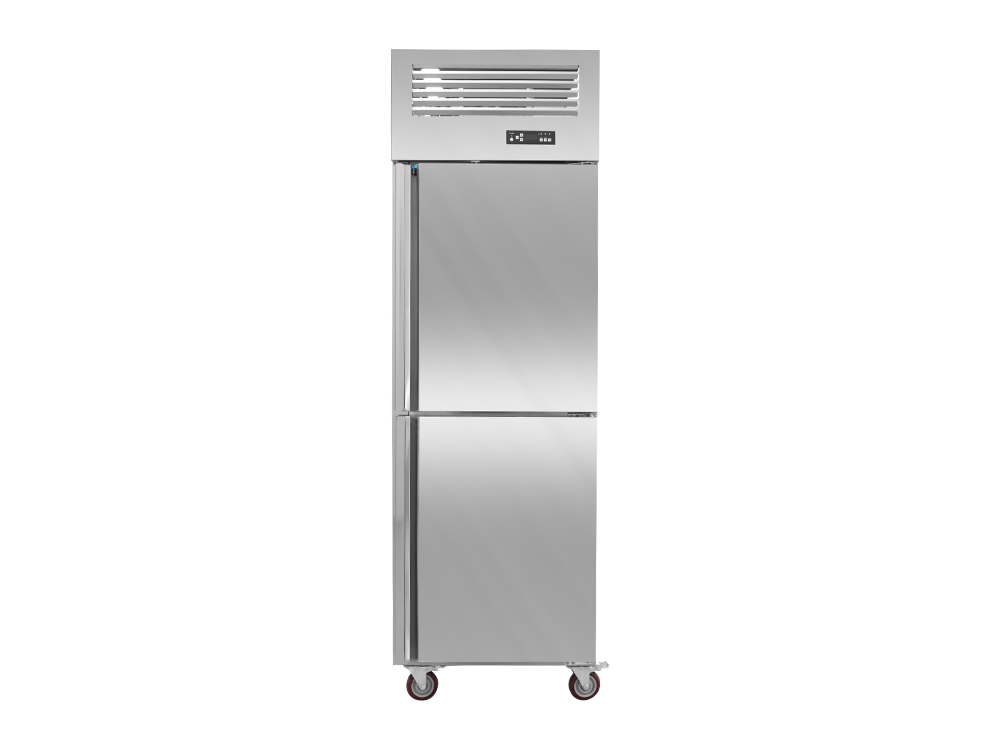
Standard Sizes, Configurations, and Installation Requirements
Reach-in refrigerators are typically sized by door count rather than exact cubic footage, though the two track closely together. Single-door units generally run 27 to 29 inches wide and hold roughly 18 to 24 cubic feet. Two-door units span about 48 to 58 inches wide with 40 to 50 cubic feet of storage, and three-door units extend to 77 to 84 inches wide, offering 65 to 75 cubic feet. Depth is fairly standardized across the industry at 30 to 35 inches, and overall height typically falls between 78 and 84 inches including the compressor housing, which matters when you're planning for a standard 84-inch commercial ceiling or a lower drop-ceiling space.
Before ordering, measure the exact opening where the unit will sit, not just the general area — commercial kitchens are usually built around standard equipment cutouts, and a unit that's an inch too wide or tall can mean a costly layout change. This is also where compressor placement becomes a practical installation issue: top-mount units need clearance above the cabinet for air intake and exhaust, while bottom-mount units need unobstructed airflow at floor level and are a poor fit for tight alcoves where the front grille could get blocked by carts or storage.
Three installation details get overlooked constantly. First, ventilation clearance — most manufacturers call for at least 4 to 6 inches of open space behind and above the condenser coil, and blocking that gap is the single most common cause of premature compressor failure. Second, electrical supply — most reach-ins run on a dedicated 115V/20A circuit, though larger multi-door or remote-condenser units may require 208-230V service, so this should be confirmed with an electrician before the unit arrives, not after. Third, leveling — an unlevel cabinet strains door hinges and gaskets and can cause water condensation issues, so adjustable legs or casters should be checked with a level during setup, not eyeballed.
Temperature Control, Energy Efficiency, and Operating Costs
Commercial reach-in refrigerators typically hold food safely between 33°F and 41°F, while reach-in freezers run from -10°F to 0°F. Most commercial units use forced-air (fan-assisted) cooling rather than static cooling, because fans circulate cold air evenly around every shelf and recover temperature faster after the door opens — a real advantage in kitchens where the door is opened dozens of times per hour. Static cooling, more common in low-cost or residential-grade units, tends to create warm spots and slower recovery, which is a food-safety risk in a busy commercial setting.
Energy consumption is where the real cost differences show up over time. ENERGY STAR certified commercial solid-door refrigerators can save on the order of 325 kWh and more than $40 a year compared with standard models, while certified glass-door refrigerators can save around 370 kWh and nearly $50 a year, which adds up to several hundred dollars over the life of the unit. To qualify, a unit generally has to use at least 15 to 20 percent less energy than the federal baseline, which manufacturers typically achieve with variable-speed compressors, thicker high-density insulation, and tighter door gaskets. On a per-unit basis, that's often the difference between roughly $150 and $300 a year in electricity for a single reach-in cooler running continuously, depending on local rates, kitchen ambient temperature, and how often the doors open.
One maintenance-linked cost that's easy to miss: units with a self-evaporating condensate drain pan eliminate the need for a floor drain and manual bucket-emptying, which sounds minor but removes a recurring labor task and a common source of standing water and slip hazards in a busy kitchen.
Top Brands, Price Ranges, and Real-World Comparisons
In the US market, True, Turbo Air, and Beverage-Air are among the most recognized reach-in refrigerator brands, and pricing generally falls into three bands. Entry-level single-door units run roughly $2,000 to $3,500, mid-range two-door models fall between about $3,500 and $6,500, and premium three-door or heavy-duty stainless models can run $6,500 to $10,000 or more, with pricing driven by insulation quality, compressor brand, warranty length, and finish. Factory-direct and OEM-manufactured units, including custom-built options from established Chinese manufacturers, often land 20 to 40 percent below comparable name-brand pricing while still meeting the same NSF, CE, and UL-adjacent safety standards — the trade-off is usually longer lead times and less immediate local service support compared with domestic brands.
Refurbished and used units are worth considering for budget-constrained operations, but they come with real trade-offs: a used unit at 40 to 60 percent of new pricing can make sense for a low-traffic secondary cooler, but the remaining compressor life and gasket condition are hard to verify, and a mid-service breakdown can easily erase the upfront savings in lost inventory and emergency repair costs.
Budget allocation should track the use case. A small bar or coffee shop with light, predictable storage needs can often get by with a single reliable door in the $2,500 to $3,500 range. A central production kitchen supporting multiple stations, by contrast, is usually better served by investing in a higher-capacity three-door unit with a stronger warranty and faster local parts availability, since downtime there affects the entire operation rather than one station.
Cleaning, Maintenance, and Long-Term Reliability
A short, consistent maintenance routine is what separates a reach-in refrigerator that lasts 15 years from one that needs a compressor replacement in year five. Monthly: vacuum or brush the condenser coil to clear dust and grease buildup, since a clogged coil forces the compressor to work harder and shortens its life. Wipe down door gaskets with mild soap and water and check for tears or gaps — a compromised gasket lets warm air in continuously and can raise energy use noticeably. Quarterly: flush the condensate drain line to prevent clogs and overflow, check that door hinges are tight and doors close flush, and confirm the cabinet is still level.
Noise is often a symptom of a placement problem rather than a defect — a unit installed too close to a wall, on an unlevel floor, or in a spot with restricted airflow will run louder and work harder than the same unit properly installed with adequate clearance on all sides.
Warranty terms vary more than buyers expect and deserve real scrutiny before purchase. Compressor warranties commonly range from 3 to 7 years across major brands, while parts and labor coverage on the rest of the cabinet is typically 1 to 2 years. Beyond the warranty length, ask about service network coverage in your area and typical response time for a service call — a longer warranty is far less valuable if the nearest authorized technician is several hours away and parts take a week to arrive.
Find Your Perfect Reach-In Refrigerator Today
The framework above — matching door type, compressor position, and cabinet size to your kitchen's real workflow, then weighing energy efficiency and warranty coverage against upfront price — is the same process our team uses when we help operators specify equipment. If you're weighing options for a new build, a replacement unit, or a multi-location rollout, we can help match your requirements to reach-in configurations that are in stock, ready for quick delivery, and backed by a complete warranty. Reach out to discuss your kitchen's layout and storage needs, and we'll help you find the right fit rather than the biggest one.
FAQ
What is the difference between a reach-in refrigerator and a walk-in cooler?
A reach-in refrigerator is a self-contained, upright cabinet designed for point-of-use storage right at a workstation, while a walk-in cooler is a room-sized, permanently installed space meant for bulk inventory. Reach-ins suit everyday ingredient access; walk-ins suit high-volume bulk storage.
What sizes do commercial reach-in refrigerators typically come in?
Single-door units typically run 27 to 29 inches wide with 18 to 24 cubic feet of capacity, two-door units run about 48 to 58 inches wide with 40 to 50 cubic feet, and three-door units run 77 to 84 inches wide with 65 to 75 cubic feet. Depth is fairly consistent across brands at 30 to 35 inches.
How much does a quality reach-in refrigerator cost in the United States?
Entry-level single-door units generally run $2,000 to $3,500, mid-range two-door models run about $3,500 to $6,500, and premium three-door or heavy-duty units can run $6,500 to $10,000 or more, depending on brand, insulation quality, and warranty terms.
Should I choose a glass door or solid door reach-in refrigerator?
Solid doors hold temperature more efficiently and suit back-of-house storage where visibility isn't needed. Glass doors let staff see contents without opening the door, which works well for beverage stations and high-traffic front-of-house areas, at a modest efficiency trade-off.
What is the recommended temperature range for a reach-in refrigerator?
Commercial reach-in refrigerators should hold food between 33°F and 41°F. Reach-in freezers should operate between -10°F and 0°F. Forced-air cooling systems generally maintain these ranges more evenly than static cooling, especially in kitchens where doors open frequently.
How do I properly install a reach-in refrigerator in my commercial kitchen?
Confirm the unit fits the exact cutout space, leave 4 to 6 inches of clearance around the condenser for airflow, connect to a dedicated electrical circuit sized for the unit, and level the cabinet with adjustable legs or casters before use. Skipping ventilation clearance is the most common cause of early compressor failure.
What maintenance is required to keep a reach-in refrigerator running efficiently?
Clean the condenser coil monthly, inspect and clean door gaskets monthly, flush the condensate drain line quarterly, and check that the cabinet remains level and hinges stay tight. This routine, done consistently, is what typically separates a 15-year unit from one needing early compressor repair.
Zhejiang Xingbao Electrical Appliance Co., Ltd.
Tel: +86-153 0659 4509
Fax: +86-(0)573-8796 5558
Email: zjxingbao@gmail.com
Address: No. 10 Baisha Road, Lianhang Development Zone, Chang'an Town, Haining City, Zhejiang, China 314423

 +86-153 0659 4509
 +86-(0)573-8796 5558
 zjxingbao@gmail.com
 No. 10 Baisha Road, Lianhang Development Zone, Chang'an Town, Haining City, Zhejiang China 314423