

 en
en  English
 中文简体
中文简体 Español
 عربى
عربىCommercial Display Freezer Buying Guide: Types, Features, Prices, and Maintenance
 2026.07.31
 Industry News
A commercial display freezer does more than keep products frozen. Its glass lid or glass door allows customers to see available products clearly, making it an important merchandising tool for supermarkets, convenience stores, ice cream shops, restaurants, and frozen food retailers.
Choosing the right display freezer requires more than comparing capacity and purchase price. Buyers should also consider floor space, product visibility, operating temperature, defrost method, energy consumption, maintenance requirements, and expected service life.
This guide explains the differences between chest and upright display freezers, reviews the most important buying features, provides a general overview of U.S. market pricing, and offers practical installation and maintenance advice.
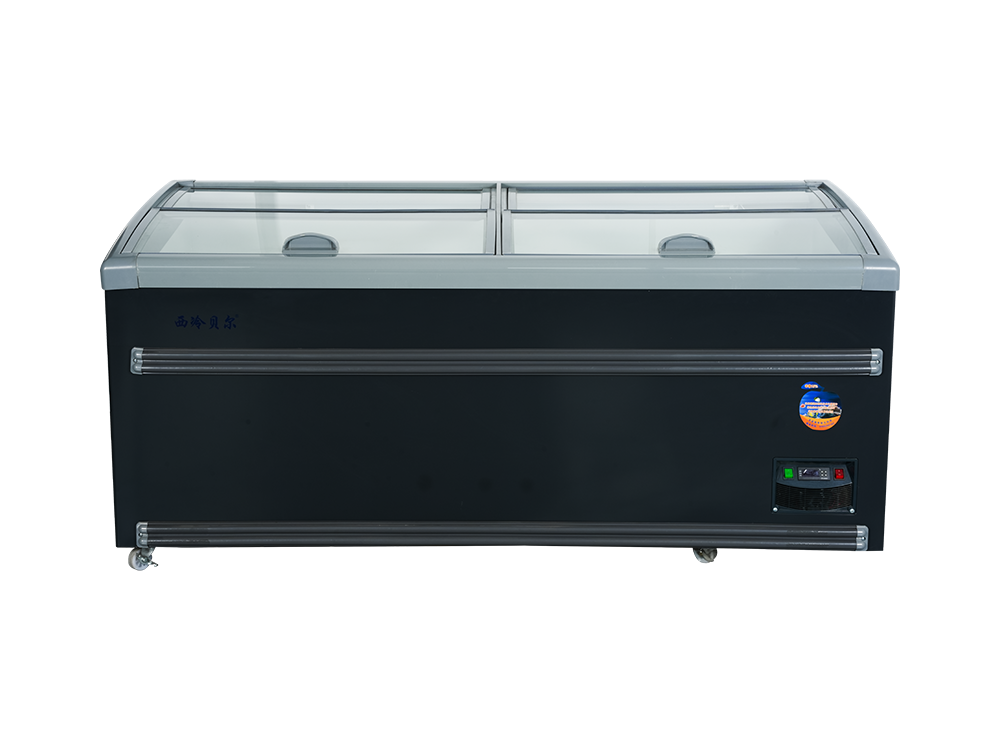
Chest vs. Upright Display Freezers: Making the Right Choice for Your Business
Commercial display freezers are generally divided into two main configurations: chest display freezers and upright display freezers. Both can preserve frozen products effectively, but they offer different advantages in terms of merchandising, space utilization, energy efficiency, and customer access.
What Is a Chest Display Freezer?
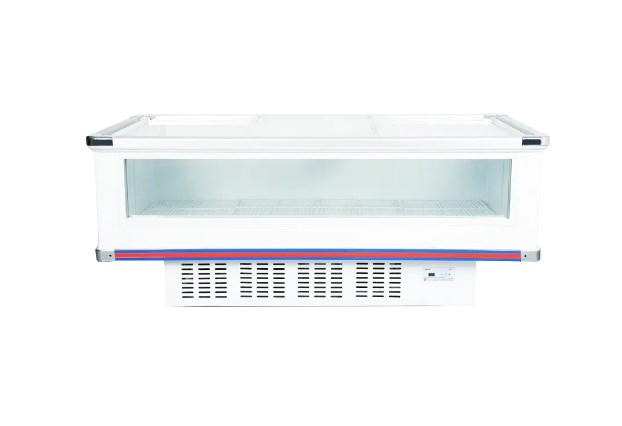
A chest display freezer has a horizontal cabinet with sliding or hinged glass lids on the top. Cold air naturally remains inside the cabinet when the lid is opened because cold air is heavier than warm air. This design can reduce cold-air loss and help the freezer maintain a stable internal temperature.
Commercial chest display freezers commonly offer capacities from approximately 150 to 800 liters. Compact models may be less than 1,000 millimeters wide, while large supermarket models can exceed 2,000 millimeters in width. Exact dimensions vary according to cabinet design, insulation thickness, compressor configuration, and storage capacity.
Chest models are particularly suitable for:
- Packaged ice cream and frozen desserts
- Ice cream tubs
- Frozen meat and seafood
- Frozen vegetables
- Bulk frozen food
- Promotional products placed in supermarket aisles
The main advantage of a chest display freezer is efficient frozen storage. However, customers may need to bend down to view or retrieve products, and goods at the bottom can be more difficult to organize. Baskets and product dividers can improve accessibility and prevent different product categories from becoming mixed.
What Is an Upright Display Freezer?
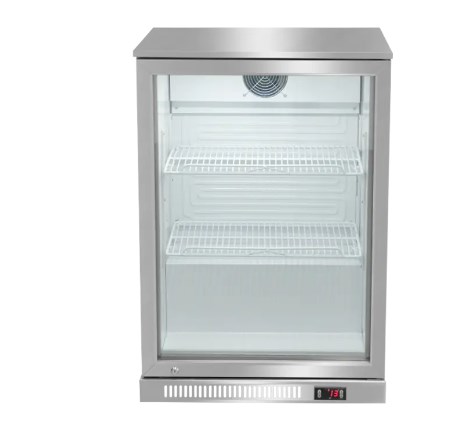
An upright display freezer uses a vertical cabinet with one or more glass doors. Products are placed on shelves at different heights, allowing customers to see multiple product categories without bending down.
Typical upright display freezer capacities range from approximately 300 to 1,500 liters. A single-door model may be around 600 to 800 millimeters wide, while two-door and three-door models can be substantially wider. Commercial models are often between 1,800 and 2,200 millimeters high.
Upright models are commonly used for:
- Packaged frozen meals
- Frozen pizzas
- Frozen snacks
- Boxed ice cream products
- Frozen bakery products
- Products that benefit from organized, eye-level presentation
The vertical layout provides excellent product visibility and uses wall space efficiently. Adjustable shelves also make inventory organization easier. However, more cold air may escape when a full-height door is opened, so door design, insulation, airflow, and recovery performance are especially important.
| Comparison Point | Chest Display Freezer | Upright Display Freezer |
|---|---|---|
| Cabinet orientation | Horizontal | Vertical |
| Floor-space requirement | Usually requires more open floor area | Uses vertical space and fits well against walls |
| Product visibility | Good with clear sliding or curved glass lids | Excellent with full-height glass doors |
| Customer access | Customers may need to bend down | Products are available at multiple eye levels |
| Cold-air retention | Generally strong when the lid is opened | Depends heavily on door opening frequency and airflow design |
| Product organization | Requires baskets or dividers | Shelves provide clear product separation |
| Typical application | Ice cream, bulk food, meat, and promotional products | Packaged frozen food and high-visibility retail displays |
For an ice cream shop, a glass-top chest freezer can provide efficient storage and convenient access to tubs or packaged desserts. For a convenience store or supermarket, an upright glass door freezer may create a stronger visual presentation and make it easier for customers to compare products.
Key Features to Evaluate: Energy Efficiency, Defrost Type, and Temperature Control
Glass Construction and Anti-Fog Performance
Glass quality directly affects insulation, product visibility, and energy consumption. Buyers should ask whether the freezer uses single, double, or triple-pane glass. Multi-pane glass creates insulating spaces that reduce heat transfer between the store and the refrigerated cabinet.
Low-E glass includes a low-emissivity coating designed to reduce radiant heat transfer. Depending on the freezer design, it can help improve insulation and reduce condensation. Heated glass, heated door frames, or anti-fog films may also be used to keep the viewing area clear in humid environments.
When comparing models, buyers should evaluate the complete door or lid system rather than focusing only on the number of glass layers. Frame insulation, gasket quality, heater wattage, door-closing performance, and ambient humidity can all affect visibility and efficiency.
Manual Defrost vs. Automatic Defrost
Ice gradually forms on the evaporator or internal surfaces of many freezers. If frost becomes excessive, it can reduce usable space, restrict airflow, and make the refrigeration system work harder.
| Defrost Type | Advantages | Considerations |
|---|---|---|
| Manual defrost | Simple construction, lower initial cost, and limited temperature fluctuation during normal operation | The freezer must periodically be emptied or managed during defrosting |
| Automatic defrost | Reduces manual labor and supports convenient daily operation | May use additional energy and requires careful control to protect frozen products |
Manual defrost is common in chest freezers and can be suitable for businesses that can schedule periodic maintenance. Automatic defrost is often preferred for upright display freezers in busy retail environments where staff cannot regularly manage ice buildup.
Temperature Range and Control Accuracy
Most commercial frozen food display freezers operate at approximately minus 18 degrees Celsius or below. Some ice cream applications require temperatures between approximately minus 18 and minus 25 degrees Celsius, depending on the product formulation and desired serving texture.
A digital thermostat can provide more precise temperature adjustment than a basic mechanical controller. Useful control features may include:
- Digital temperature display
- High-temperature alarm
- Low-temperature alarm
- Door-open alarm
- Compressor delay protection
- Automatic defrost scheduling
- Temperature sensor error warning
Buyers should confirm that the stated operating range applies under the expected ambient conditions. A freezer tested in a moderate environment may perform differently in a hot convenience store, an unconditioned kitchen, or a high-humidity coastal region.
Energy Consumption and Estimated Operating Cost
Purchase price is only one part of freezer ownership. A commercial freezer may operate continuously for many years, so even a modest improvement in efficiency can reduce long-term expenses.
ENERGY STAR provides certified commercial refrigeration product listings and efficiency information. Its commercial refrigeration guidance also notes potential energy savings for qualifying equipment, although actual savings depend on the cabinet type, operating conditions, electricity rate, and usage pattern.
A simple annual electricity estimate can be calculated using the following plain-text formula:
Estimated Annual Energy Use = Rated Power in Kilowatts × Average Daily Operating Hours × 365
Estimated Annual Electricity Cost = Annual Energy Use in Kilowatt-Hours × Local Electricity Rate
For example, assume a freezer has an average operating demand of 0.5 kilowatts:
0.5 kilowatts × 24 hours × 365 days = 4,380 kilowatt-hours per year
If electricity costs USD 0.15 per kilowatt-hour:
4,380 kilowatt-hours × USD 0.15 = USD 657 per year
This is a simplified estimate. Compressors cycle on and off, and actual consumption is influenced by ambient temperature, door-opening frequency, product loading, condenser cleanliness, defrost heaters, lighting, insulation, and thermostat settings. For a more reliable comparison, ask suppliers for tested daily or annual energy-consumption data.
Noise and Warranty
Noise may be important when a freezer is installed near a checkout counter, café seating area, hotel lobby, or office pantry. Ask for operating noise data when available and confirm whether the value includes the compressor and condenser fan.
Warranty coverage should clearly identify the duration for the complete unit, compressor, parts, and labor. Importers should also confirm how replacement parts, technical support, and warranty claims are handled in their destination market.
Commercial Display Freezer Brands and Current U.S. Market Pricing
The U.S. commercial refrigeration market includes premium brands such as True, Beverage-Air, and Turbo Air, together with value-oriented and imported equipment sold through restaurant-equipment dealers, home-improvement retailers, and online marketplaces.
Prices vary considerably according to capacity, door count, compressor type, certification, warranty, and dealer services. Current retail listings indicate that commercial freezers can range from several hundred U.S. dollars to several thousand U.S. dollars. For example, Home Depot describes a general one-door commercial freezer range of approximately USD 500 to USD 5,000, while marketplace listings show glass-door upright units around USD 1,700 to USD 3,000 for selected configurations. These figures are market references rather than fixed quotations.
| Market Segment | Approximate U.S. Price Range | Typical Characteristics |
|---|---|---|
| Compact or entry-level display freezer | USD 700 to USD 1,800 | Smaller capacity, basic controls, and one lid or door |
| Mid-range commercial model | USD 1,800 to USD 4,000 | Larger capacity, digital control, improved glass, and automatic defrost options |
| Premium branded upright freezer | USD 4,000 to USD 10,000 or more | Heavy-duty construction, advanced airflow, stronger warranties, and established service networks |
Buyers should avoid comparing models by price alone. A lower-cost freezer may still offer good value when it has suitable insulation, reliable components, required safety certification, readily available spare parts, and an efficient cabinet design.
Second-hand commercial freezers can reduce initial investment, but buyers should inspect the compressor, condenser, evaporator, glass, gaskets, refrigerant system, controller, and cabinet insulation. The cost of repairing an inefficient or poorly maintained used freezer can quickly offset the original saving.
For distributors, supermarket projects, and private-label programs, working directly with a display freezer manufacturer may provide additional options, including custom branding, voltage configuration, plug selection, shelf layout, glass style, cabinet color, packaging, and order-volume planning.
Installation, Maintenance, and Long-Term Care Tips
Installation Requirements
Install the freezer on a firm, level surface. An uneven cabinet can prevent doors or sliding lids from closing correctly and may increase vibration or noise.
Leave sufficient ventilation space around the condenser and air outlets. The exact clearance should follow the manufacturer’s instructions. Blocking the ventilation area can increase condensing temperature, energy use, and compressor stress.
Before connecting the freezer, verify:
- Rated voltage and frequency
- Plug and socket compatibility
- Circuit capacity
- Grounding requirements
- Recommended clearance
- Maximum ambient temperature
- Indoor or outdoor use classification
Do not place the freezer next to ovens, heating equipment, or windows receiving strong direct sunlight. Allow the unit to stand in its normal position before startup if it was tilted during transportation, following the supplier’s instructions.
Routine Cleaning and Inspection
Clean glass surfaces with a soft cloth and a non-abrasive cleaner. Avoid sharp tools and aggressive chemicals that could damage Low-E coatings, anti-fog films, seals, or decorative finishes.
Inspect door and lid gaskets regularly. Dirt, cracks, hardening, or deformation can allow warm air to enter the cabinet. Clean gaskets with mild soapy water and replace them when they no longer create a consistent seal.
The condenser should be checked and cleaned periodically. In many environments, an inspection every three to six months is practical, but dusty kitchens and high-traffic stores may require more frequent cleaning. Always disconnect power and follow the manufacturer’s safety instructions before maintenance.
Loading and Daily Operation
Do not block internal air outlets or overfill shelves. Upright freezers require clear airflow paths to maintain an even temperature throughout the cabinet. Products should already be frozen before loading unless the equipment is specifically designed for freezing unfrozen goods.
Minimize unnecessary door openings and make sure sliding lids are fully closed. Staff should also record cabinet temperatures regularly, especially when the freezer stores temperature-sensitive products.
Replacing Glass Lids or Doors
Cracked glass, damaged hinges, worn rollers, and ineffective heaters should be addressed promptly. Replacement glass must match the original dimensions, safety requirements, insulation structure, and heating system. Using ordinary glass instead of the specified insulated assembly may cause condensation, energy loss, or a safety hazard.
Can a Display Freezer Be Used Outdoors?
Most standard commercial display freezers are designed for indoor use. Outdoor placement can expose the cabinet to rain, direct sunlight, dust, wind, corrosion, and temperatures beyond its intended operating range.
For outdoor vending or food-service applications, select a model specifically designed or approved for the environment. The installation may require a weatherproof shelter, corrosion-resistant materials, protected electrical connections, controlled ventilation, and additional security. An indoor-rated freezer should not be placed outdoors simply by adding a basic cover.
Quick Display Freezer Buying Checklist
- Identify the products and required storage temperature.
- Measure the available width, depth, height, and door-opening space.
- Choose between chest and upright configurations.
- Confirm usable capacity rather than relying only on external dimensions.
- Compare glass construction and anti-fog features.
- Review manual and automatic defrost options.
- Request tested energy-consumption information.
- Confirm voltage, frequency, plug, and certification requirements.
- Review the complete warranty and spare-parts policy.
- Evaluate the manufacturer’s customization and export capabilities.
Find the Right Display Freezer for Your Market
Zhejiang Xingbao Electrical Appliance Co., Ltd. supplies commercial refrigeration equipment for retail and food-service applications. Available solutions include chest display freezers, glass-lid freezers, upright display freezers, and configurable refrigeration products for distributors and commercial buyers.
Buyers can review detailed specifications, compare available configurations, or contact the Xingbao team to discuss capacity, temperature range, glass design, branding, voltage, packaging, and other project requirements.
Browse Commercial Display Freezers or request a quotation for your market.
Frequently Asked Questions
What is the difference between a chest display freezer and an upright display freezer?
A chest display freezer has a horizontal cabinet with a glass lid and generally provides strong cold-air retention and bulk storage. An upright display freezer has vertical glass doors and shelves, offering better eye-level visibility and more organized product presentation.
How much does a commercial display freezer typically cost in the U.S.?
Entry-level units may start at approximately USD 700 to USD 1,800. Mid-range models commonly cost around USD 1,800 to USD 4,000, while premium multi-door commercial units can exceed USD 10,000. Capacity, brand, certification, warranty, and dealer services all influence the final price.
What size display freezer do I need for an ice cream shop or convenience store?
A small ice cream shop may use a chest freezer between approximately 200 and 500 liters, while a convenience store may need one or more upright models between approximately 500 and 1,500 liters. The correct size depends on inventory volume, delivery frequency, product packaging, available floor space, and expected sales.
Are glass door freezers energy efficient?
Modern glass door freezers can be energy efficient when they use insulated multi-pane glass, effective gaskets, efficient compressors, LED lighting, and well-designed airflow. Compare tested energy data and keep the condenser, doors, and gaskets clean to control operating costs.
What maintenance does a display freezer require?
Regular maintenance includes cleaning the glass and cabinet, inspecting gaskets, removing frost when necessary, cleaning the condenser, checking the temperature, keeping airflow passages clear, and replacing damaged glass or door components.
Can I use a commercial display freezer outdoors?
Only use a freezer outdoors when the model is specifically designed or approved for outdoor conditions. Standard indoor units may be damaged by rain, dust, sunlight, corrosion, or extreme temperatures.
What warranty should I expect when buying a display freezer?
Warranty terms vary by manufacturer and market. Buyers should confirm coverage for the complete unit, compressor, other components, labor, international support, and replacement parts before placing an order.
Related News

Looking for Reliable Partner?
We are committed to becoming your most trusted partner.
Contact info.
 +86-153 0659 4509
 +86-(0)573-8796 5558
 zjxingbao@gmail.com
 No. 10 Baisha Road, Lianhang Development Zone, Chang'an Town, Haining City, Zhejiang China 314423
Mobile QR Code
Copyright © Zhejiang Xingbao Electrical Appliance Co., Ltd. All Rights Reserved. Custom Commercial Refrigerator Factory
