

 en
 English
 中文简体
 Español
 عربى
Supermarket Freezer Island Buying Guide: Specs, Energy, Layout, and ROI
 2026.10.21
 Industry News
Frozen food merchandising binds a supermarket to a long-term energy load. A typical 2.5-meter supermarket freezer island consumes 8 to 15 kWh per day depending on insulation, airflow design, and whether it carries a glass lid. Over a ten-year service life, a difference of just 2 kWh per day adds up to roughly 7,300 kWh - the kind of number that quietly decides which cabinet is actually cheaper after installation. This guide compares the specifications, layout trade-offs, and operating costs that determine whether a supermarket freezer island earns its floor space.
What a supermarket freezer island must deliver before it earns floor space
A supermarket freezer island must hold packaged frozen food at a core temperature of -18°C or colder while keeping the product visible and reachable from all sides. Every design decision - insulation thickness, evaporator capacity, defrost interval, lid construction - serves one of those two jobs. When either side fails, the store either risks a food safety violation or loses the impulse sales that justify the floor space.
Definition
A supermarket freezer island is a self-contained, multi-access refrigeration display cabinet with open-top or glass-lidded product access, installed as a freestanding unit or as a row of joined modules in the frozen food aisle.
- Core temperature: frozen food must stay at -18°C or lower, including during and after defrost cycles.
- Recovery speed: cabinet air temperature should return to setpoint within 20 to 30 minutes after peak traffic.
- Airflow uniformity: even cold air distribution prevents a warm top layer of product and ice crystal growth in exposed packs.
- Condensate handling: the unit must manage meltwater in humid store environments without pooling on the floor.
- Visibility: the product plane should sit at a height that suits adult shoppers and children reaching for ice cream.
Key specifications to compare when selecting a supermarket freezer island
The most useful comparison between island freezers is based on usable volume, temperature performance, insulation thickness, refrigerant type, defrost method, and daily energy draw - not on list price alone. When quotes arrive for the same nominal length, seemingly identical cabinets can differ by 30% in energy consumption and by several degrees in recovery time.
| Specification | Typical range | Impact on operation |
| Usable volume per meter | 300-900 L | Determines SKU count per linear meter |
| Temperature range | -21°C to -18°C | Ice cream needs -18°C or colder |
| Insulation thickness | 60-75 mm injected PU | Thicker foam cuts heat infiltration |
| Refrigerant | R290 / R404A | Affects future compliance and service cost |
| Defrost method | Off-cycle / electric | Electric defrost adds heat to the cabinet |
| Daily energy draw | 6-18 kWh per unit | Largest component of operating cost |
Store layout software needs usable internal volume, not exterior footprint. Modular sections joined into a single line create the largest continuous display area without dead corners. For configurable aisle runs, a combined unit lets the store team scale a row from three to seven meters using matched modules and solid end panels.
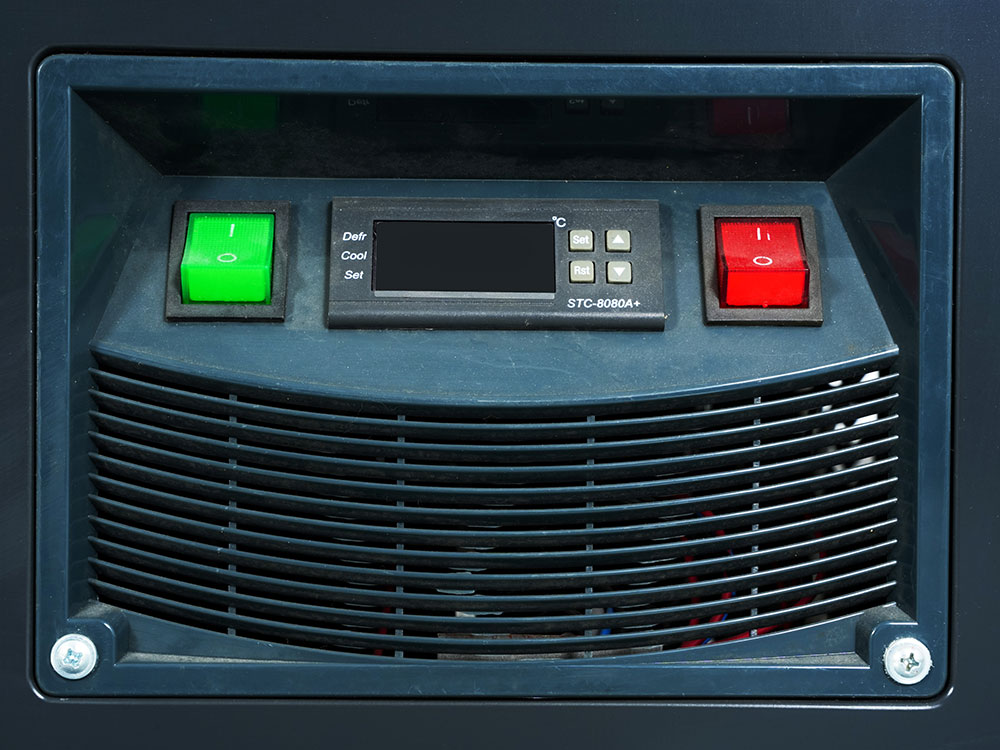 Combined Freezer Island Showcase with Electronic DefrostThis modular freezer island offers a combined display line for flexible aisle layouts. Its electronic defrost option simplifies maintenance, while the 1.8-meter length and 860mm width suit supermarket settings requiring efficient space usage.View Product →
Insulation is the second most important specification. Injected polyurethane foam of 60 to 75 mm keeps heat infiltration low; thinner foam forces the compressor to cycle more often. Ask the supplier to state the test method for energy values, ideally ISO 23953, so numbers from different brands can be compared on the same basis.
Open-top versus glass-lid supermarket freezer islands: the layout trade-off
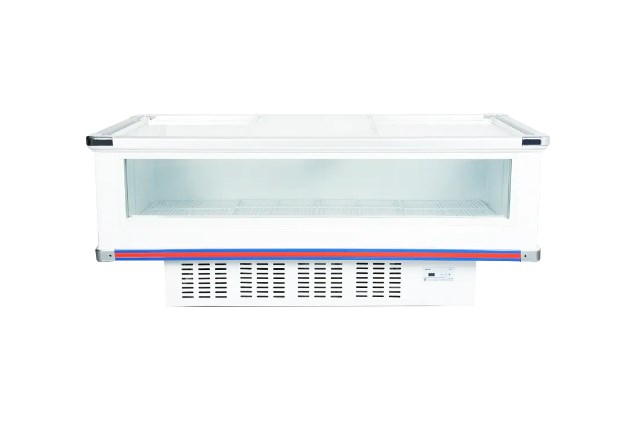
Open-top units maximize sightlines and impulse purchases, while glass-lid units reduce energy consumption by roughly one-third and protect ice cream at a more stable temperature. The two configurations are not interchangeable in every aisle. An open line works best for high-rotation frozen meals and vegetables where shoppers want fast access. A glass-lid line fits premium products - ice cream tubs, seafood, par-baked goods - where temperature stability and packaging condition matter more than grab speed.
Open-top island
- Direct product access from any angle
- Full-width visibility of package graphics
- 8-15 kWh per day for a 2.5 m unit
- Faster cabinet temperature drift
- More dust and customer debris ingress
Glass-lid island
- Roughly 30-40% lower energy draw
- Stable core temperature for ice cream
- One-hand lid opening for shoppers
- Fewer defrost cycles per day
- Lower layers harder to inspect at a glance
For heavy-traffic locations, the frame and edge construction matters as much as the cooling engine. A wider profile with reinforced trim resists cart impacts and preserves seal integrity over years of daily operation.
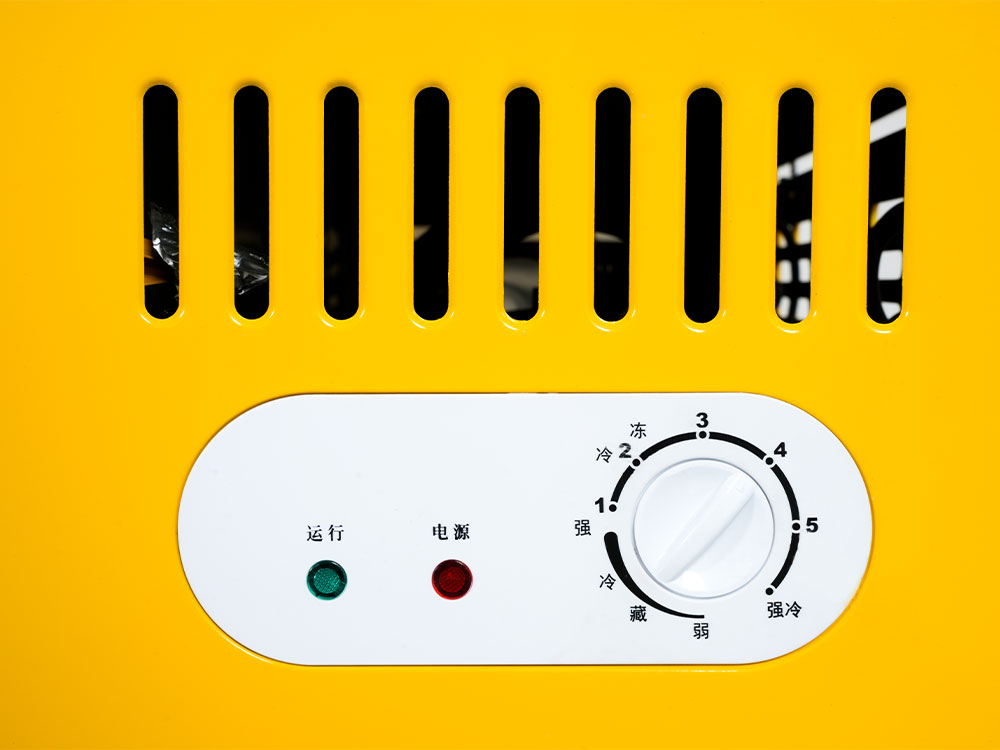 European Style Aluminum-Alloy Edging Long Freezer Island CabinetBuilt with reinforced aluminum-alloy edging, this long freezer island resists impacts in busy aisles. Its extended cabinet provides bulk frozen food storage, making it a practical choice for supermarkets with high-volume display needs.View Product →
Energy efficiency and total cost of ownership of supermarket freezer islands
Electricity is the dominant cost of a supermarket freezer island, typically more than half of its ten-year total cost of ownership when purchase, maintenance, and energy are combined. A cabinet priced 20% lower but using 2 kWh more per day turns more expensive after about four years at typical commercial rates, so compare lifetime costs, not unit prices.
Average daily energy draw of a 2.5 m island freezer
Night blinds are the cheapest retrofit: covers fitted over open cabinets reduce night-time energy draw by 10-20% in stores that run the frozen aisle around the clock. EC condenser fans and LED lighting strip another 5-10% from the total bill.
-18°CFrozen food core temperature requirement
30-40%Energy saving from glass lids versus open-top units
2 kWhDaily draw difference that equals 7,300 kWh over ten years
300,000Units of annual production capacity at the manufacturing site
Equipment durability also feeds the total cost. Cabinet frames, hinge points, and gasket material fail before compressors do in most installations. A manufacturer with established production volume and a documented quality system is more likely to deliver consistent build quality across a multi-unit order. Zhejiang Xingbao Electrical Appliance Co., Ltd. has 21 years of refrigeration manufacturing experience and produces island freezer series in a 50,000 m² facility near Shanghai and Ningbo ports, which also shortens export logistics.
Installation planning, maintenance, and supplier qualification
A supermarket freezer island performs to its specification only when installation clearances, floor preparation, and a scheduled maintenance routine match the manufacturer's requirements. The most common performance complaints - high energy bills, frost buildup, and compressor short-cycling - trace back to blocked airflow or a dirty condenser rather than a defective unit.
- Maintain the ventilation clearance specified in the manual; restricted airflow raises condensing pressure and energy draw.
- Level every module within 2-3 mm across its length so condensate drains correctly.
- Clean condenser coils every three to six months in dusty environments.
- Replace lid gaskets at the first sign of hardening or cracking.
- Log cabinet temperatures for at least seven days after commissioning and re-check after seasonal changes.
Supplier diligence matters as much as the cabinet. Verify certifications such as CE and CCC, review a recent factory audit, and confirm the spare parts policy before ordering. Since island freezer lines are installed in multiples, ask for a reference store that has run the same model for at least two years, then reach the Zhejiang Xingbao sales team through the factory contact page.
Frequently asked questions about supermarket freezer islands
What temperature should a supermarket freezer island maintain?
A supermarket freezer island should maintain a stable cabinet temperature between -21°C and -18°C. Ice cream is the strictest category; it begins to soften and lose texture above -18°C, and repeated temperature swings cause ice crystal growth that customers notice.
How much energy does a supermarket freezer island consume?
A typical 2.5-meter open-top island freezer consumes 8 to 15 kWh per day. Glass-lid versions use roughly 30-40% less under the same conditions. Actual consumption depends on ambient store temperature, defrost frequency, product load density, and how often shoppers open lids.
Are glass-lid island freezers less effective at driving sales?
Not necessarily. Glass lids keep the product visible and protected from contamination. Many stores place open units in the main aisle for impulse categories and glass-lid units in a dedicated premium section, which combines high visibility with the stricter temperature control that ice cream requires.
What defrost method works best for an island freezer?
Off-cycle defrost suits cabinets running below -10°C in moderate store humidity. Electric defrost clears frost faster but adds heat that the compressor must remove again, raising energy costs. Match the defrost interval to the actual frost load instead of keeping the factory default.
Related News

Looking for Reliable Partner?
We are committed to becoming your most trusted partner.
Contact info.
 +86-153 0659 4509
 +86-(0)573-8796 5558
 zjxingbao@gmail.com
 No. 10 Baisha Road, Lianhang Development Zone, Chang'an Town, Haining City, Zhejiang China 314423
Mobile QR Code
Copyright © Zhejiang Xingbao Electrical Appliance Co., Ltd. All Rights Reserved. Custom Commercial Refrigerator Factory
