

 en
en  English
 中文简体
中文简体 Español
 عربى
عربىBack Bar Cooler Buying Guide: Size, Doors, Temperature, Installation and Cost
 2026.08.21
 Industry News
A back bar cooler is more than refrigerated storage. In a busy bar, restaurant, hotel, café, or entertainment venue, its dimensions, door configuration, shelf arrangement, temperature recovery, and ventilation design directly affect service speed and operating efficiency.
For U.S. buyers, choosing the right unit means looking beyond overall cubic-foot capacity. A cooler must physically fit the bar, hold the right beverage mix, remain accessible during peak service, and operate reliably without overheating.
This guide explains the main specifications to compare before purchasing a commercial back bar cooler.
Back Bar Cooler Sizing: Dimensions, Capacity, and Shelf Layout
Start with the space rather than the advertised capacity.
Commercial back bar refrigerators are commonly designed around counter or underbar installations. Widths vary considerably, with compact models around 24 inches and larger two- or three-door configurations extending to approximately 48, 60, or 72 inches and beyond. Current U.S. commercial listings, for example, include models from about 23.5 inches to more than 72 inches wide.
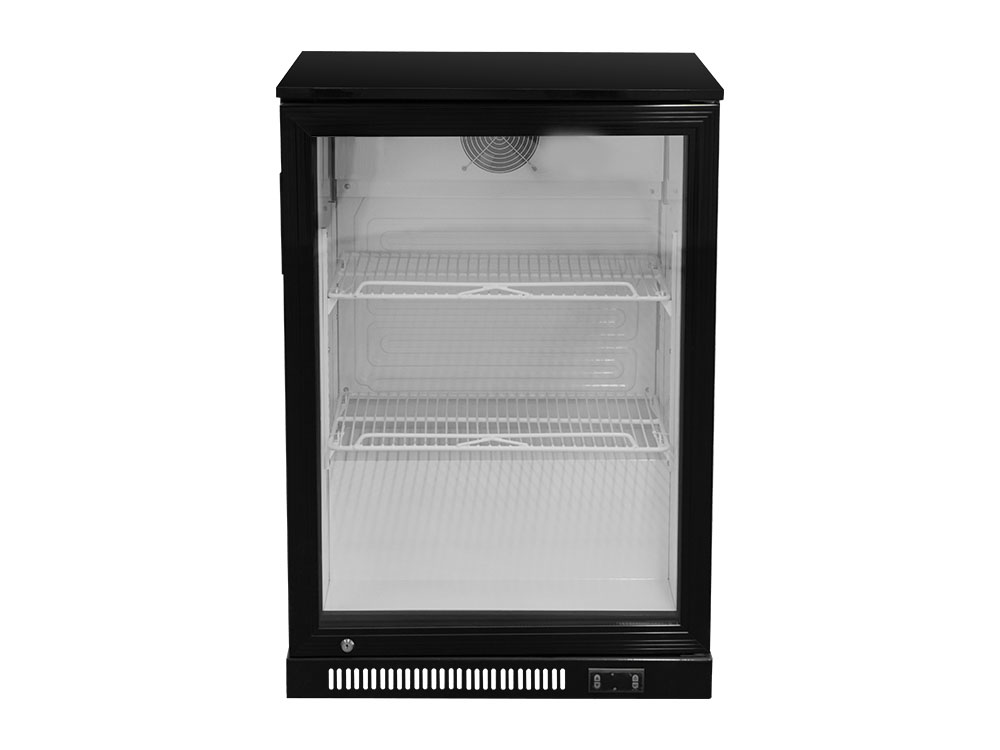
Before ordering, measure:
- The clear opening width
- Available cabinet height
- Maximum allowable depth
- Doorways and access routes into the building
- Counterfront or handle projection
- Door swing or sliding-door clearance
- Space required for ventilation
Do not assume that a nominal 48-inch model will fit exactly into a 48-inch opening.
Capacity also deserves more attention than the cubic-foot figure. Ask the supplier how many standard 12 oz cans or bottles can be stored under a realistic shelf configuration. The usable quantity changes depending on whether the bar stocks mostly beer cans, long-neck bottles, wine bottles, mixers, or different package sizes.
Adjustable shelves are particularly useful for commercial buyers because they allow one cabinet to support several beverage formats. A shelf layout optimized for 12 oz cans may produce high unit capacity, while upright wine or champagne bottles require substantially more vertical clearance.
Zhejiang Xingbao, for example, offers multiple back bar cooler formats, including double-door, three-door, hinged-door, and sliding-door configurations, allowing buyers to match cabinet layout more closely to their available service area.
Glass Door vs Solid Door: Choosing the Right Back Bar Cooler Front
Glass and solid doors solve different operational problems.
A glass-door back bar cooler is generally better when employees need to identify products quickly or when the refrigerator is visible to customers. Bartenders can check inventory before opening the door, while illuminated bottles can also contribute to product presentation.
For a customer-facing bar, look for features such as:
- Double-pane insulated glass
- Low-E glass where available
- Anti-condensation design
- Interior LED lighting
- Self-closing doors
- Replaceable magnetic gaskets
- Door locks
Glass doors do, however, require more frequent cleaning. Fingerprints, water spots, and condensation become visible quickly in a brightly lit bar.
A solid-door cooler sacrifices product visibility but provides complete visual shielding. It can be useful for service stations where beverage presentation is unimportant, inventory needs to remain concealed, or the cabinet is located in a less customer-facing area.
The choice should therefore be based on workflow rather than appearance alone.
Choose glass doors when product visibility and quick identification matter. Choose solid doors when concealed storage and operational simplicity are more important.
Door style also matters. Sliding glass doors reduce the amount of aisle space required in narrow installations, whereas hinged doors usually provide a larger unobstructed opening when fully opened. For a narrow bartender workstation, that difference can be significant during a busy shift.
Temperature Control and Energy Efficiency Ratings
Most beverages stored in a commercial back bar refrigerator need consistent refrigeration rather than freezing. A common operating target for commercial beverage refrigeration is roughly 32°F to 40°F, although the ideal setting depends on the drinks being stored and the manufacturer’s specified operating range.
Beer is often kept toward the colder end of this range. Wine may require a warmer setting, depending on the type of wine and whether the cabinet is intended for short-term service storage or longer-term preservation.
For mixed beverage applications, buyers should examine:
- Digital thermostat adjustment
- Display accuracy
- Temperature uniformity
- Compressor cycling
- Recovery time after repeated door openings
- Ambient operating temperature
- Automatic defrost
- Single-zone or multi-zone capability
Temperature recovery is particularly important in commercial bars. A refrigerator may maintain its set point easily when closed overnight but behave very differently when bartenders open it dozens of times during peak service.
Energy consumption should also be compared by model rather than assumed from cabinet size alone. ENERGY STAR specifically includes eligible categories such as undercounter refrigerators, back bar coolers, bottle coolers, and beer-dispensing equipment in its commercial refrigeration program. Its efficiency requirements are based partly on cabinet configuration, volume, door type, and daily energy consumption.
For the U.S. market, buyers may also encounter NSF and ETL or other recognized electrical safety certifications. NSF certification is particularly relevant to sanitation, hygienic construction, material safety, cleanability, and commercial food-equipment requirements.
Certification should always be verified for the exact model being purchased rather than assumed from the manufacturer’s overall product range.
Noise is another useful specification for open bars, hotel lounges, and residential entertainment areas. A quieter compressor and well-controlled condenser fan can make a noticeable difference when the cooler operates only a few feet from customers.
Installation Clearance, Ventilation, and Compressor Placement
Even a correctly sized cooler can fail prematurely if ventilation is restricted.
There is no universal clearance number for every back bar refrigerator. Requirements vary according to condenser design and manufacturer.
For example, a current Beverage-Air refrigeration manual specifies zero clearance at the top and sides for the referenced units, 3 inches at the rear and bottom, while also requiring the front ventilation grille to remain unobstructed. A current True underbar refrigeration manual, by comparison, specifies approximately 1 inch of clearance at the top, sides, and back for listed TBB models.
This is why buyers should follow the installation manual for the exact model rather than relying on a generic rule such as “leave two inches around the refrigerator.”
Pay particular attention to airflow design.
A front-breathing unit can usually be integrated more easily into tight cabinetry because condenser air enters or exits through the front grille. Rear- or side-ventilated designs need more open space around those surfaces.
Compressor position also influences maintenance. A bottom-mounted or side-mounted refrigeration system may make components easier to reach without moving the entire cabinet, depending on the installation.
Before purchasing, determine whether the cooler will be used in:
- A ventilated commercial bar
- A restaurant back bar
- A garage bar
- A residential entertainment area
- A covered outdoor patio
Outdoor use requires special attention. A standard indoor commercial cooler should not automatically be installed outside simply because the patio has a roof. Outdoor-rated equipment needs suitable protection against moisture, rain, humidity, temperature extremes, dust, and corrosion.
Always confirm the manufacturer’s rated installation environment.
Brand Reliability, Pricing, and Long-Term Ownership Costs
Initial purchase price is only one part of the cost of a back bar cooler.
Current U.S. commercial listings illustrate how wide the pricing range can be. Value-oriented commercial back bar refrigerators around 48 to 72 inches can sell for roughly $1,000 to $2,000, while premium commercial models can exceed $4,000 to $6,000, depending on brand, construction, size, doors, refrigeration design, and other specifications. Some premium 60-inch models are currently listed above $5,000.
Rather than buying solely by brand name or lowest price, compare the components that affect lifecycle cost:
Compressor and refrigeration system:
Check compressor type, refrigerant, condenser accessibility, expected ambient conditions, and availability of replacement components.
Insulation and doors:
Poor door sealing increases compressor runtime. Magnetic door gaskets should be inspected regularly and replaced when cracked, loose, or permanently deformed.
Replacement parts:
Ask whether thermostats, controllers, fan motors, LED components, hinges, locks, shelves, gaskets, and refrigeration parts can be ordered independently.
Warranty:
Compare complete cabinet coverage with separate compressor warranties. Also determine whether labor is covered locally or whether the warranty applies only to replacement components.
Cleaning and maintenance:
Stainless steel surfaces should be cleaned using non-abrasive materials. Condenser coils and ventilation grilles need periodic cleaning because accumulated dust can restrict heat rejection and increase operating temperature.
For importers, distributors, and private-label buyers, long-term parts availability can be just as important as the original unit price. A slightly less expensive refrigerator offers little advantage if a failed thermostat or door gasket is difficult to replace two years later.
Manufacturers should therefore be evaluated on product configuration, replacement parts support, documentation, certification options, and production consistency—not simply cabinet price.
Choosing the Right Back Bar Cooler for Your Project
A practical purchasing decision can begin with four questions:
- What is the exact width, height, and depth available behind the bar?
- Do you need glass doors for display or solid doors for concealed storage?
- What beverages and package sizes will the cooler hold?
- How will the refrigeration system receive and exhaust air?
Once these specifications are clear, compare shelf configuration, temperature control, electrical requirements, certifications, replacement parts, and budget.
Zhejiang Xingbao Electrical Appliance Co., Ltd. manufactures commercial refrigeration equipment including several configurations of back bar coolers. Buyers planning a bar, restaurant, hotel, retail, or distribution project can provide their required dimensions, door configuration, capacity, and target market requirements when requesting suitable product options.
Before placing an order, measure the installation opening again and confirm the required ventilation and compressor arrangement on the final technical drawing.
FAQ
What size back bar cooler fits a standard 34-inch undercounter space?
Look for a counter-height or underbar model whose finished cabinet height, including feet or casters, stays below the available opening. Do not purchase based only on a nominal “34-inch” description. Leave any ventilation clearance required by the manufacturer’s installation instructions and verify the actual technical drawing before ordering.
How many 12 oz bottles or cans can a back bar cooler hold?
Capacity depends on cabinet width, compressor compartment size, shelf spacing, and beverage packaging. Two coolers with similar external dimensions can hold different quantities. Ask for bottle or can capacity based on the exact shelf layout rather than relying only on cubic-foot volume.
Should I choose a glass door or solid door back bar cooler for my bar?
Choose glass doors when product visibility, inventory identification, and illuminated beverage presentation are important. Choose solid doors when concealed storage, simpler cleaning, and product display are less important. Sliding glass doors are particularly useful where bartender aisle space is limited.
What temperature range should a back bar cooler maintain for beer and wine?
A commercial beverage cooler commonly operates around 32°F to 40°F, although the correct setting depends on the beverage and refrigerator specification. Beer is typically stored colder than many wines. If several beverage types require significantly different temperatures, consider separate cabinets or independent temperature zones.
How much clearance and ventilation does a back bar cooler need?
There is no single clearance requirement for every unit. Some front-breathing commercial models require very little side clearance but need an unobstructed front grille, while other models require clearance at the back, sides, or top. Always follow the installation manual for the exact model.
Can a back bar cooler be installed outdoors on a covered patio?
Only if the manufacturer approves the model for that environment. A roof alone does not make an indoor refrigerator suitable for outdoor use. Outdoor installations need protection against humidity, rain, corrosion, dust, and high or low ambient temperatures.
How much does a reliable back bar cooler cost in the US?
Current commercial listings show entry and mid-range models around $1,000–$2,000, while premium commercial units can reach $4,000–$6,000 or more. Size, stainless steel construction, glass configuration, compressor design, certification, warranty, and brand all affect the final price.
Related News

Looking for Reliable Partner?
We are committed to becoming your most trusted partner.
Contact info.
 +86-153 0659 4509
 +86-(0)573-8796 5558
 zjxingbao@gmail.com
 No. 10 Baisha Road, Lianhang Development Zone, Chang'an Town, Haining City, Zhejiang China 314423
Mobile QR Code
Copyright © Zhejiang Xingbao Electrical Appliance Co., Ltd. All Rights Reserved. Custom Commercial Refrigerator Factory
