

 en
 English
 中文简体
 Español
 عربى
Supermarket Island Freezer Buying Guide: Capacity, Energy, Layout and Cost
 2026.11.18
 Industry News
A grocery chain in eastern China replaced twelve open-top supermarket island freezer units in early 2026 and cut its frozen-aisle electricity bill by 23 percent in six months. The winning models were not the cheapest on the tender list; they had the shortest defrost recovery time and the lowest anti-condensate heater draw. That same measurable logic should drive every supermarket island freezer purchase, at any store size.
A supermarket island freezer sits in the middle of a frozen aisle, reachable from two or more sides, so it earns more product facings per square meter than a wall case. That open access also creates thermal loss, higher energy draw, and stricter defrost requirements. The job is balancing capacity, temperature stability, energy, and aisle flow against your actual store layout.
What Separates a Supermarket Island Freezer from Other Freezers
Core definition
A supermarket island freezer is a self-contained frozen food merchandiser with an open top or glass lids, engineered for multi-sided product access in a retail aisle. It is the only common freezer type placed in the middle of traffic flow, which changes both its sales economics and its refrigeration engineering.
Count the sides: a wall chest gives shoppers one access edge; a glass-door reach-in gives one front face; an island unit gives two, three or four. More edges mean higher product rotation and stronger impulse purchases, but also larger cold-air spillage. Glass-lid island freezers cut that spillage while keeping 360-degree access, at the cost of slightly slower restocking.
| Criteria | Island Freezer | Chest Freezer | Glass-Door Reach-In |
| Access sides | 2-4 | 1 | 1 |
| Typical capacity | 400-1,200 L | 200-600 L | 600-1,500 L |
| Open display area | Large | Small | None, closed |
| Relative energy use | Medium-high | Lowest | Medium |
| Best location | Aisle center | Storage room | Wall line |
The conclusion for a store owner: if the frozen section runs on self-service browsing, an island freezer is the fixture that converts aisle traffic into frozen food sales.
Capacity and Footprint Planning for a Supermarket Island Freezer
Decide the floor footprint first; gross capacity comes second, because aisle width and case dimensions control how many facings you can stock. Buyers who start with capacity often end up with a unit that does not fit the traffic lane or the delivery cart route.
Measure the available aisle space and keep at least 1.8 m of clear walking width beside every island unit. Standard island freezers, including the island freezer series built by Xingbao, typically run 1.8 to 3.0 m in length and 0.8 to 1.0 m in depth. A combined island cabinet offers two temperature zones; a long European-style unit suits larger floor plans.
1.8 mMinimum clear aisle width
22-28 kgFrozen product load per 100 L
-18 CRequired core temperature
3-6Defrost cycles per day
Use these planning checks before ordering:
- Walk-space clearance: keep 1.8 m clear width beside the unit.
- Load density: plan 22-28 kg of packaged frozen food per 100 L of gross volume.
- Restock access: leave rear room for pallet jacks and roll carts.
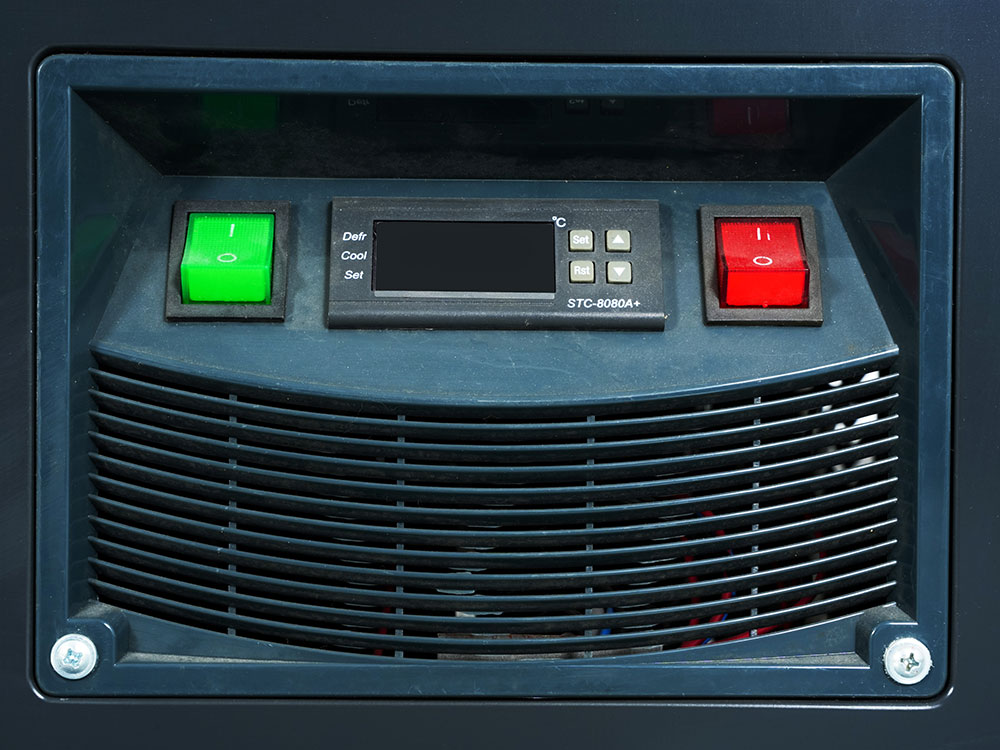
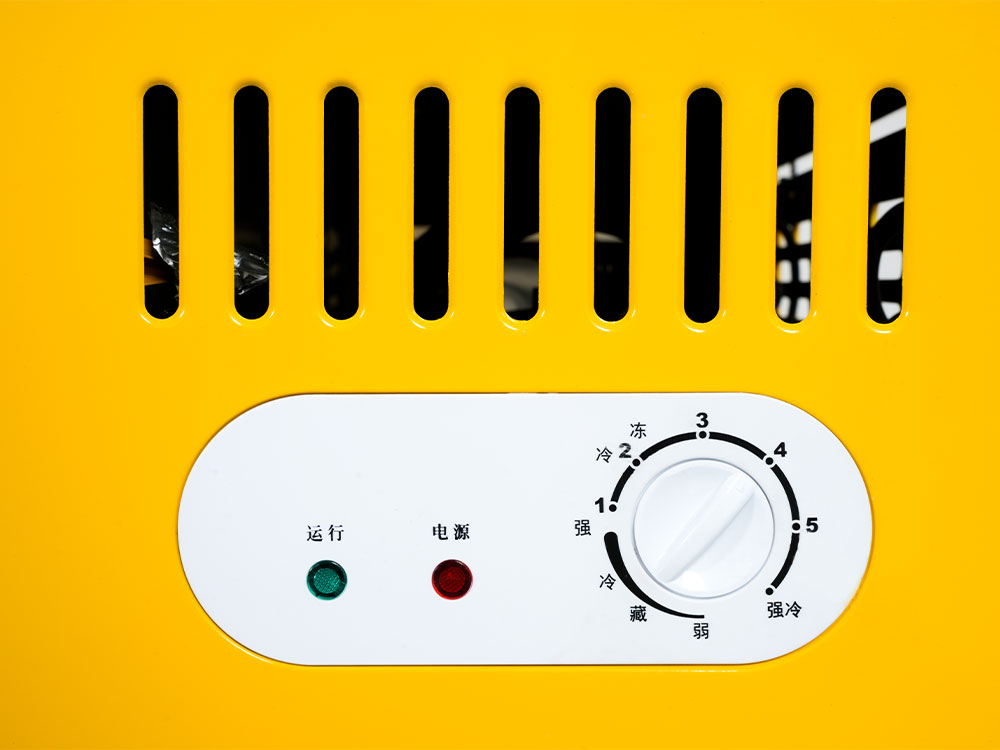
- Condenser ventilation: maintain 100-150 mm around the intake grille.
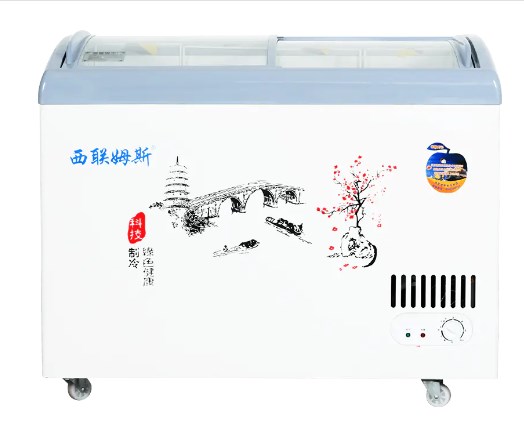
 Combined Freezer Island Showcase with Electronic DefrostThis island freezer offers flexible sizing and electronic defrost for easier maintenance. Before ordering, verify door swing, column placement, and floor drains to avoid blocking exits or interfering with daily operations.View Product →
Key takeaway: footprint before liters, because the aisle decides the facings.
Confirm door swing, column positions, and floor drains before you order. A unit that blocks a fire exit is a daily operating problem.
How Supermarket Island Freezer Temperature and Defrost Affect Food Safety
A stable -18 C at the warmest product point, not the controller setpoint, is the only temperature target that matters. Open-top and glass-lid cases differ mainly in how quickly they regain that target after defrost.
Food safety audits check core product temperature, not the controller reading. A case that shows -18 C at the sensor but holds -13 C near the top fails the same way as a warmer unit. The top layer sits closest to the opening and the lights.
Put these five specifications on your shortlist:
- Temperature range: reach -18 C in a 25 C ambient and hold it in a 40 C summer.
- Defrost type: electric, air, or hot-gas; hot-gas defrost shortens recovery.
- Recovery time: from the highest defrost temperature back to -18 C in under 30 minutes.
- Probe placement: sensor at the warmest product level, not in the return air duct.
- Alarm and logging: audible high-temperature alarm plus temperature log access for audits.
Food safety math
Recovery time after defrost is the most important food-safety specification. At four defrost cycles per day, a 45-minute recovery keeps product above -15 C for nearly three hours every day.
Ask the manufacturer's engineering team via the contact page for the tested defrost curve. If the supplier cannot document recovery time, treat the specification as unverified.
Energy Efficiency and the Ten-Year Cost of Ownership
Purchase price is less than 20 percent of a supermarket island freezer's ten-year cost; electricity and maintenance dominate the rest. A 400 kWh per year difference becomes a real budget line across twenty units.
Annual energy use for a 600 L merchandiser varies widely by lid configuration. Glass lids cut demand by roughly 25 to 30 percent versus open-top models by stopping cold-air spillage and reducing defrost frequency. Chest freezers stay the most efficient because of their smaller opening and insulation, but they cannot merchandise product like an island unit.
Annual energy use per 600 L case (kWh)
Chest freezer980 kWh
Glass-lid island1,350 kWh
Glass-door reach-in1,620 kWh
Open-top island1,940 kWh
Run the seven-year comparison with your local electricity tariff:
| Cost component | Glass-lid island | Open-top island |
| Purchase price | $3,400 | $2,900 |
| Electricity over 7 years | $1,800 | $2,600 |
| Maintenance over 7 years | $450 | $700 |
| Total 7-year cost | $5,650 | $6,200 |
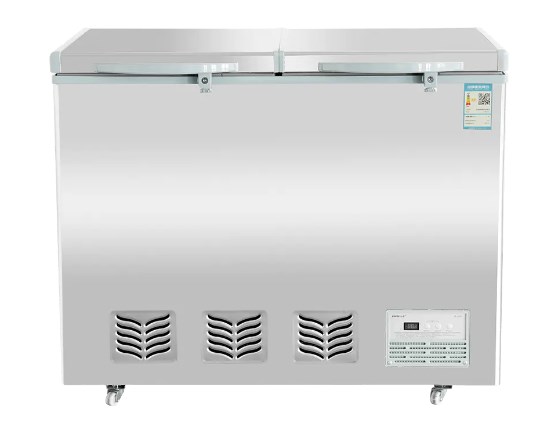
 European-Style Aluminum-Edging Long Freezer Island CabinetDesigned for bulk frozen display in supermarkets, this longer cabinet provides ample storage. Compare its upfront cost and energy draw with local tariffs, as efficiency savings may offset the initial investment over time.View Product →
Data point: the open-top island costs about 10 percent more to operate over seven years than the glass-lid model in this example.
The glass-lid unit costs more upfront, but lower energy draw and fewer service calls close the gap by year three. Ask the manufacturer for SKU-level efficiency data and compare it with your local utility rate.
Aisle Layout and the Impulse Sales Effect
Island freezers drive measurable incremental sales because they slow shoppers down and invite approach from multiple angles. An item displayed on an island is seen from at least two paths, raising the chance of a stop-and-buy decision.
Layout discipline turns that exposure into revenue:
- Clear aisle: keep the 1.8 m lane; a blocked lane kills the multi-side advantage.
- Promotion ends: put promotional SKUs at island ends, where customers turn.
- Best sellers: place them on top-layer corners, the highest-reach zones.
- Lighting: use 750 to 1,000 lux of LED light so products read clearly from a distance.
Layout note
Facing count matters more than total volume. A 2.4 m island with 60 cm of usable depth on each side gives 8-10 facings per level, roughly double a wall chest of the same footprint.
The effect depends on service too. A well-stocked island with visible price markers outperforms a half-emptied or fogged unit, so restock twice a day in peak seasons.
Maintenance Routines That Extend Island Freezer Life
Condenser cleaning and lid gasket inspection prevent roughly 70 percent of island freezer failures. The rest come from electrical faults and compressor wear that early diagnosis can catch.
Build a simple rhythm:
- Weekly: inspect lid seals, remove packaging debris from the door rails, confirm lids close fully.
- Monthly: clean condenser coils; blocked coils raise condensing temperature and push energy use up 10 to 20 percent.
- Quarterly: check the defrost drain, verify thermometer accuracy with a calibrated probe, inspect hinges.
- Annually: have a technician check refrigerant charge, compressor windings, and electrical connections.
Diagnostics rule
If defrost time grows more than 20 percent above the unit's original schedule, inspect the coils and refrigerant charge before changing any control settings.
Track defrost duration in a log. Replace worn gaskets early; a gap around a glass lid can double the heat load and cause persistent corner frost.
Frequently Asked Questions
How much floor space does a supermarket island freezer need?
Allow 1.8 m of clear walking width beside the unit, plus 100-150 mm behind it for condenser airflow. A 2.4 m x 0.9 m island therefore needs roughly 2.2 square meters plus service clearance.
Should we choose glass lids or an open top for frozen food?
Choose glass lids when energy budgets and defrost stability matter most; they cut annual energy use by 25 to 30 percent. Choose open-top models when maximum visibility and rapid access matter, and when the store climate is cool and dry.
What temperature should a supermarket island freezer maintain?
The unit must keep the warmest product point at or below -18 C. Check core temperature with a calibrated probe during the hottest hour of the day, not the controller reading.
How long do commercial island freezers last?
With regular cleaning and gasket replacement, a commercial island freezer typically serves 10 to 15 years. Shielded evaporator fans and hot-gas defrost usually extend that life.
Final check
Verify defrost recovery time, energy class, and service access before you sign the order, and ask the manufacturer for documented test data.
Related News

Looking for Reliable Partner?
We are committed to becoming your most trusted partner.
Contact info.
 +86-153 0659 4509
 +86-(0)573-8796 5558
 zjxingbao@gmail.com
 No. 10 Baisha Road, Lianhang Development Zone, Chang'an Town, Haining City, Zhejiang China 314423
Mobile QR Code
Copyright © Zhejiang Xingbao Electrical Appliance Co., Ltd. All Rights Reserved. Custom Commercial Refrigerator Factory
