

 en
en  English
 中文简体
中文简体 Español
 عربى
عربىWhat is the difference between a drawer and a door under-counter freezer?
 2026.07.22
 Industry News
The Essential Solution for Space-Efficient Cold Storage
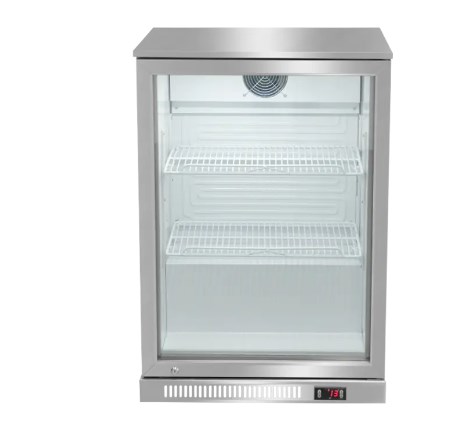
An under-counter freezer is the definitive solution for maximizing storage density in environments where square footage is at a premium. Unlike standard upright units, these appliances are engineered to fit seamlessly beneath standard countertop heights, typically measuring between 32 and 36 inches in height. They provide immediate access to frozen goods without disrupting the workflow of a kitchen, making them indispensable for both compact residential renovations and high-volume commercial prep lines. By utilizing dead space under counters, these units expand freezing capacity without encroaching on the floor space required for movement and other appliances.
Strategic Advantages for Workflow and Design
The primary benefit of integrating an under-counter freezer lies in its ergonomic contribution to the kitchen's "work triangle." In a culinary setting, efficiency is dictated by the reduction of steps taken between the refrigerator, stove, and sink. By placing a freezer unit under the counter, often adjacent to a prep station, users minimize movement, thereby reducing fatigue and increasing speed.
Key Operational Benefits
- Space Optimization: Ideal for galley kitchens, islands, or bars where a standard upright freezer would obstruct pathways.
- Ergonomic Access: Reduces the need to reach high shelves; heavy items can be lifted from a lower position, reducing back strain.
- Modular Flexibility: Can be installed in multiples to create a continuous band of refrigeration along a wall.
Configurations: Choosing Between Doors and Drawers
When selecting an under-counter freezer, the choice of access method—doors or drawers—is the most critical decision point. Each configuration serves a distinct organizational purpose. Door models are generally more cost-effective and better for storing large, bulky items that might not fit into a drawer partition. However, they require clearance space for the door swing, which can be a limiting factor in tight layouts.
Conversely, drawer models offer superior organization and ergonomic access. They allow the user to view the contents from above without crouching, and cold air tends to stay trapped within the drawer cavity even when open, unlike door models where cold air spills out rapidly. This design is particularly favored in professional environments for storing specific ingredients like proteins or pre-portioned desserts.
| Feature | Door Model | Drawer Model |
|---|---|---|
| Best For | Bulky items, turkeys, large bags | Organized prep, small containers |
| Clearance | Requires swing space | Zero front clearance needed |
| Temperature Retention | Moderate (air loss on open) | High (cold air settles) |
Installation and Ventilation Requirements
Proper installation is the single most influential factor in the longevity of an under-counter freezer. Because these units are often enclosed by cabinetry or tucked against a wall, heat dissipation is a critical engineering challenge. The compressor generates heat that must be expelled; if this heat is trapped, the compressor runs continuously, leading to premature failure and excessive energy consumption.
Front Breathing vs. Rear Breathing
Most modern residential units are designed as "front-breathing," meaning they intake and exhaust air from the front bottom grille. This allows the unit to be pushed completely flush against the back wall without requiring clearance. However, commercial-grade or older models often require several inches of clearance at the rear and sides. Failing to adhere to clearance specifications can void warranties and reduce efficiency by up to 25%.
When planning the installation, one must also consider the floor material. These units are heavy when fully stocked. A reinforced floor is necessary to prevent the unit from settling or causing uneven wear on soft flooring like vinyl. Furthermore, electrical requirements typically demand a dedicated 15-amp circuit to handle the initial power surge when the compressor starts.
It is also vital to check the door swing or drawer protrusion in relation to neighboring appliances or islands. An obstruction can prevent the door from opening fully, which not only makes loading difficult but can also prevent the magnetic door seal from engaging properly, allowing warm air to infiltrate the cabinet.
Performance Metrics and Temperature Consistency
The performance of an under-counter freezer is measured by its ability to maintain sub-zero temperatures during heavy use. Because these units have a smaller thermal mass than large walk-in freezers, they can fluctuate in temperature more rapidly when the door is opened. High-quality units feature thicker insulation walls and robust compressors to compensate for this.
- Recovery Time: A critical metric is how quickly the unit returns to set temperature after a door opening. Commercial units typically feature a recovery time of under 10 minutes.
- Defrost Cycles: Manual defrost models maintain more consistent temperatures but require physical labor to clean. Auto-defrost models introduce slight temperature spikes during the heating cycle, which can affect the texture of sensitive foods like ice cream.
Maintenance for Longevity
Maintenance for an under-counter freezer differs slightly from upright units due to its location. Being lower to the ground, the condenser coils are more susceptible to collecting dust, pet hair, and kitchen grease that settles on the floor. This accumulation acts as an insulating blanket on the coils, preventing heat transfer.
Maintenance Tip: It is recommended to clean the condenser coils or air filter every three months. In dusty environments or high-traffic kitchens, this frequency should be increased to monthly. A clean coil can improve energy efficiency by up to 15% and extend the compressor's life significantly.
Additionally, the door gasket (the rubber seal around the door) should be inspected regularly. Because the freezer is under a counter, crumbs and debris often accumulate on the gasket. A compromised gasket allows cold air to escape, signaling the compressor to run more frequently. A simple test involves closing the door on a dollar bill; if it slides out easily with little resistance, the gasket needs replacement.
Related News

Looking for Reliable Partner?
We are committed to becoming your most trusted partner.
Contact info.
 +86-153 0659 4509
 +86-(0)573-8796 5558
 zjxingbao@gmail.com
 No. 10 Baisha Road, Lianhang Development Zone, Chang'an Town, Haining City, Zhejiang China 314423
Mobile QR Code
Copyright © Zhejiang Xingbao Electrical Appliance Co., Ltd. All Rights Reserved. Custom Commercial Refrigerator Factory
