

 en
en  English
 中文简体
中文简体 Español
 عربى
عربىWhat Is the Best Cooler Showcase for Your Retail Store?
 2026.04.22
 Industry News
When investing in a cooler showcase, the fundamental conclusion is that the right choice directly dictates product preservation quality, energy consumption, and overall sales performance. There is no universal best model; the ideal unit is the one that perfectly aligns with your specific product type, available floor space, target audience behavior, and local climate conditions. Prioritizing aesthetic appeal over functional temperature stability is a common mistake that leads to inventory loss. Therefore, your selection process must begin with the thermal requirements of your merchandise, followed by spatial logistics, and finally, visual merchandising capabilities. Understanding this hierarchy ensures that the cooler showcase serves as a profit-generating asset rather than a recurring expense.
Understanding the Fundamental Types
The market offers several distinct configurations of cooler showcases, each engineered for specific retail environments and product categories. Choosing the wrong type not only jeopardizes product integrity but also creates bottlenecks in customer flow. The primary differentiation lies in how customers access the products and how the unit integrates into the store layout.
Vertical Multideck Displays
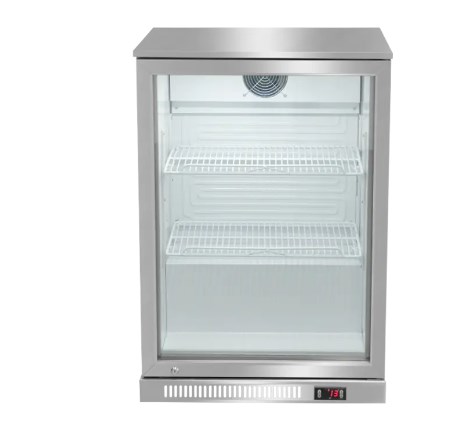
Vertical units are the most common sight in convenience stores and medium-sized supermarkets. They maximize the utility of vertical space, offering multiple shelving levels that allow for high-density product storage. Customers can easily browse at eye level, making these units excellent for impulse purchases like chilled beverages, dairy products, and pre-packaged snacks. The sliding or swing doors on these units help maintain stable temperatures, though open-front designs sacrifice some energy efficiency for drastically improved accessibility.
Horizontal Chest and Deli Models
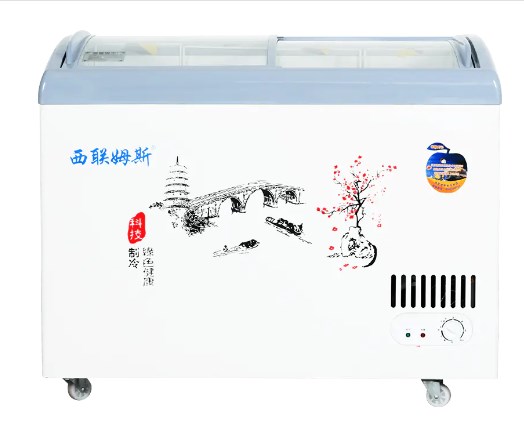
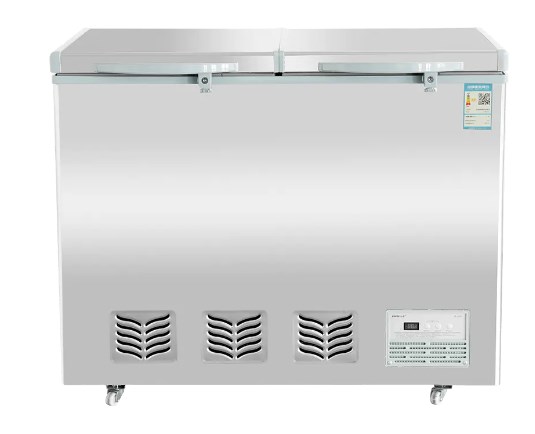
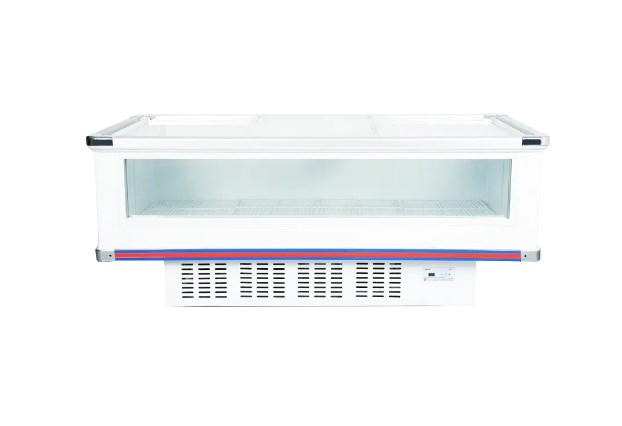
Horizontal units feature a top-opening glass lid or a low-profile display window. These are predominantly used for bulk items, fresh meats, deli products, and pre-packaged ice cream. Because cold air is heavier than warm air, opening a top lid results in minimal cold air loss compared to opening a vertical door. This physical characteristic makes horizontal models inherently more energy-efficient for deep-chill requirements. However, they require more floor space per cubic foot of storage and are not ideal for quick-grab scenarios where customers are in a hurry.
Countertop and Specialty Units
For establishments with severe space constraints, such as small bakeries, cafes, or checkout counters, countertop cooler showcases provide a compact solution. These units hold a limited inventory but place high-margin items directly in the consumer's line of sight during the transaction process. While they lack the storage capacity of larger models, their conversion rate for impulse buys is remarkably high.
Matching Temperature Zones to Product Requirements
A critical error in retail refrigeration is assuming that all chilled products require the same environment. Different merchandise demands specific temperature ranges to prevent bacterial growth, texture degradation, or freezing. A high-quality cooler showcase will offer precise temperature control tailored to these distinct zones.
| Product Category | Required Temperature Range | Humidity Consideration |
|---|---|---|
| Fresh Meat and Seafood | 28°F to 32°F (-2°C to 0°C) | High humidity prevents weight loss |
| Dairy and Deli | 34°F to 38°F (1°C to 3°C) | Moderate and stable |
| Beverages and Packaged Foods | 35°F to 40°F (2°C to 4°C) | Low humidity preferred |
| Ice Cream and Frozen Treats | -10°F to 0°F (-23°C to -18°C) | No specific humidity requirement |
Failing to respect these boundaries has immediate consequences. Storing beverages at meat-level temperatures will cause them to freeze and burst, while storing fresh cuts at beverage temperatures accelerates bacterial proliferation, drastically reducing shelf life. When selecting a unit, verify its thermostat range and ensure it can maintain that range consistently, even during peak store hours when doors are opened frequently.
Energy Efficiency and Operational Costs
Refrigeration is typically one of the largest consumers of electricity in a retail environment. The design of your cooler showcase plays a massive role in determining your monthly utility overhead. Open-air multi-deck displays can consume up to twice as much energy as glass-door models of the same size. While open displays increase product visibility and impulse purchases, the financial trade-off in energy costs must be carefully calculated against the projected increase in sales volume.
Several engineering features separate efficient models from energy sinks. Look for units equipped with high-density foam insulation, which reduces heat transfer from the surrounding store environment. LED lighting is another non-negotiable feature; older fluorescent bulbs not only consume more power but also emit heat, forcing the compressor to work harder to maintain set temperatures. Furthermore, variable-speed compressors and electronically commutated fans adjust their output based on real-time cooling demand rather than running at maximum capacity constantly. This alone can reduce energy consumption significantly over the lifespan of the unit.
The placement of the unit also affects its efficiency. Positioning a cooler showcase in direct sunlight, next to an oven, or directly in the path of HVAC vents will cripple its performance. The compressor must be located in a well-ventilated area to ensure proper heat dissipation. If the condenser coil is choked with dust or located in a confined, hot space, the system loses efficiency rapidly, leading to higher bills and eventual mechanical failure.
Visual Merchandising and Sales Psychology
A cooler showcase is not merely a storage box; it is a dynamic sales tool. The psychological impact of how products are presented inside the unit directly influences purchasing behavior. Retailers who treat their refrigeration units as purely functional equipment are leaving significant revenue on the table.
Lighting Strategies
Lighting within a cooler showcase must perform two distinct tasks: illuminate the product and enhance its visual appeal. The color temperature of the light is critical. A cool, slightly bluish light in the range of 6000K makes fresh seafood and raw meats look vibrant and appealing. Conversely, a warmer light around 3000K to 3500K enhances the rich colors of baked goods, deli meats, and certain beverages. Utilizing the wrong color temperature can make fresh food look unappetizing or stale, regardless of its actual quality.
Shelf Layout and the Decoy Effect
The arrangement of products on the shelves should be deliberate. The most profitable or high-margin items should be placed at eye level, which is generally the most accessible and highly viewed zone. Lower shelves are ideal for bulk items or staple goods that customers are specifically seeking out, as they will bend down to find them. The top shelf can be used for premium or specialty items, creating an aspirational tier. Additionally, retailers often use a version of the decoy effect by placing a very expensive premium option next to a slightly less expensive, but still high-margin, option. The premium item makes the second item look like a bargain, driving up the average transaction value.
Glass Clarity and Anti-Fog Technology
If customers cannot clearly see the product, they will not buy it. Condensation on glass doors is a major barrier to sales. In humid environments or during high-traffic periods, standard glass can fog up entirely. Modern cooler showcases utilize heated glass, triple-pane insulated glass, or hydrophobic coatings to prevent condensation. Ensuring that your unit has effective anti-fog technology guarantees that the merchandise remains the focal point at all times, maintaining the visual merchandising strategy even under challenging environmental conditions.
Essential Maintenance for Longevity
Even the most advanced, expensive cooler showcase will deteriorate rapidly without a strict maintenance regimen. Routine upkeep is the only way to protect your initial investment and ensure consistent food safety. Neglecting maintenance leads to a predictable cascade of failures: reduced cooling efficiency, higher energy bills, temperature fluctuations, and ultimately, total compressor failure.
Coil Cleaning and Airflow
The condenser and evaporator coils are the lungs of the refrigeration system. As the unit operates, these coils act as magnets for dust, grease, and airborne debris. When the coils become coated, they lose their ability to absorb and release heat effectively. Dirty condenser coils can increase energy consumption by over 20 percent and cause the compressor to overheat. Depending on the environment—such as a busy bakery or a dusty warehouse—coils should be cleaned with a stiff brush and a specialized, non-corrosive commercial cleaner at least once a month, or more frequently if visible debris accumulates.
Gasket Integrity
The rubber gaskets around the doors are the primary seal preventing cold air from escaping. Over time, gaskets suffer from physical wear, tearing, and compression set, which prevents them from forming a tight seal. A simple test is to close the door on a piece of paper; if the paper slides out easily without resistance, the gasket is failing. Replacing damaged gaskets is a low-cost task that prevents the compressor from running continuously to compensate for the constant leakage of cold air.
Defrost Systems
Frost buildup on the evaporator coils acts as an insulator, blocking the transfer of heat from the product to the refrigerant. If the unit does not have an automatic defrost system, or if the defrost timers and heaters malfunction, ice will accumulate rapidly. Manual defrosting must be performed whenever frost builds up to a thickness greater than a quarter of an inch. For commercial operations, relying on manual defrost is generally impractical, making automatic defrost systems with functional drain lines an essential feature to prevent water pooling and ice dams inside the display area.
Integrating the Showcase into Store Layout
The physical placement of a cooler showcase dictates how customers navigate your store. Proper layout design uses refrigeration to guide foot traffic, expose customers to more merchandise, and create natural sightlines. Poor placement creates dead zones, causes congestion, and decreases the overall shopping experience.
In grocery environments, the standard strategy is to place high-traffic, grab-and-go cooler showcases near the entrance and the checkout lanes. This targets customers making quick trips who only want a beverage or a single snack. Larger, multi-deck displays containing dairy and perishables are typically pushed to the back perimeter of the store. This layout forces customers to walk past aisles of non-refrigerated, high-margin goods to reach staple items like milk and eggs, significantly increasing the chance of unplanned purchases.
Aisle width is another crucial consideration. The National Retail Federation suggests that minimum aisle widths should allow two shopping carts to pass each other comfortably. If a cooler showcase protrudes too far into a narrow aisle, it creates a bottleneck. During peak hours, customers will actively avoid congested areas, meaning the products in that specific cooler showcase will experience lower sales volume simply because they are physically difficult to access.
Cross-Merchandising Opportunities
A highly effective layout strategy involves cross-merchandising. Instead of grouping all chilled items together, place complementary items adjacent to the cooler showcase. For example, positioning a display of chips, crackers, or artisan bread next to a deli meat and cheese cooler showcase encourages customers to build a complete meal. Similarly, placing coffee beans or mugs next to a refrigerated creamer display leverages the psychological association between the products, driving multiple sales from a single customer intent.
Advanced Features Worth the Investment
As retail technology evolves, cooler showcases have transitioned from simple insulated boxes to sophisticated, data-driven machines. While advanced features increase the upfront purchase price, they often deliver a strong return on investment through labor savings, reduced shrinkage, and enhanced customer engagement.
- IoT Remote Monitoring: Internet-connected sensors allow managers to monitor the internal temperature of the unit remotely via a smartphone or computer. If the temperature deviates from the set threshold, an instant alert is sent. This feature is invaluable for preventing catastrophic product loss during off-hours, such as overnight power outages or compressor failures.
- Digital Pricing Labels: Integrating electronic shelf labels into the cooler showcase eliminates the labor-intensive process of manually changing paper tags. Prices can be updated centrally in seconds, which is particularly useful for implementing dynamic pricing strategies during peak hours or clearing out expiring inventory with automated markdowns.
- Self-Closing Doors: For glass-door models, hydraulic self-closing mechanisms ensure that customers never accidentally leave the door ajar. This simple mechanical addition drastically reduces cold air loss, stabilizes internal temperatures, and lowers energy consumption.
- Ultrasonic Humidification: Found in high-end fresh produce and meat displays, these systems maintain precise humidity levels without introducing excess moisture that could freeze on the coils. This technology significantly extends the visual shelf life of perishable goods, reducing the amount of unsellable inventory that must be discarded.
Navigating Health and Safety Regulations
Retail food operations are heavily regulated, and your cooler showcase is subject to strict health department scrutiny. Health inspectors do not care about aesthetics or sales psychology; their sole focus is on preventing foodborne illnesses. Non-compliance can result in fines, mandatory business closures, and severe reputational damage.
The primary regulatory requirement is accurate temperature monitoring. Health codes universally mandate that potentially hazardous foods must be kept at or below a specific safe temperature. To comply, every cooler showcase must be equipped with a calibrated, easily readable thermometer. The probe should be placed at the warmest point of the unit, which is typically near the top of an open display or near the door hinge of a glass-door model. Relying solely on the digital display on the external control panel is often insufficient, as it measures air temperature at the return vent, not the actual product temperature.
Additionally, the materials used inside the showcase must be food-safe. The interior shelving, liner, and any exposed metals must be approved for direct food contact. They must be non-porous, resistant to corrosion from acidic food spills, and easy to sanitize. Features like rounded interior corners, removable shelves, and coved flooring make cleaning significantly easier, helping maintain the sanitary conditions required to pass health inspections consistently. Documenting daily temperature logs and routine cleaning schedules demonstrates due diligence to inspectors and provides a critical paper trail in the event of a suspected food safety incident.
Related News

Looking for Reliable Partner?
We are committed to becoming your most trusted partner.
Contact info.
 +86-153 0659 4509
 +86-(0)573-8796 5558
 zjxingbao@gmail.com
 No. 10 Baisha Road, Lianhang Development Zone, Chang'an Town, Haining City, Zhejiang China 314423
Mobile QR Code
Copyright © Zhejiang Xingbao Electrical Appliance Co., Ltd. All Rights Reserved. Custom Commercial Refrigerator Factory
