

 en
en  English
 中文简体
中文简体 Español
 عربى
عربىHow to choose suitable refrigeration equipment for hotel daily operation?
 2026.05.15
 Industry News
Hotel refrigeration equipment serves as an indispensable basic facility throughout daily hotel management, supporting catering service, guest room comfort, food storage and public area environment regulation simultaneously. Normal running status of these devices directly decides guest accommodation experience and internal operational efficiency of the whole hotel. Once refrigeration systems break down, food deterioration risk will rise sharply, indoor temperature cannot keep comfortable standards, and daily service procedures will be severely hindered.
Industry practical statistics show that well-maintained refrigeration devices can cut down unexpected loss caused by food spoilage by more than sixty percent, meanwhile effectively lower guest complaints related to indoor temperature discomfort. For medium and large-scale hotels with complete service chains, refrigeration equipment covers multiple functional areas, bearing different working loads and operating demands respectively. Reasonable configuration and scientific management become key factors to maintain long-term stable hotel operation.
Apart from basic cooling and freezing effects, modern hotel refrigeration equipment also integrates environmental protection and energy consumption control performance. With continuous upgrading of industry service standards, hotels no longer merely pursue simple cooling effect, but balance use effect, operating cost and environmental compliance, making comprehensive performance of refrigeration equipment an important evaluation index of hotel comprehensive service strength.
Common Classification and Practical Application Scenarios
Food Storage Refrigeration Devices
This type of equipment is mainly placed in hotel back kitchens, food processing rooms and material storage warehouses, specially used to preserve fresh ingredients, finished meals, dairy products and beverages. Different storage objects require distinct temperature control ranges, so classified refrigeration equipment is adopted to meet preservation demands.
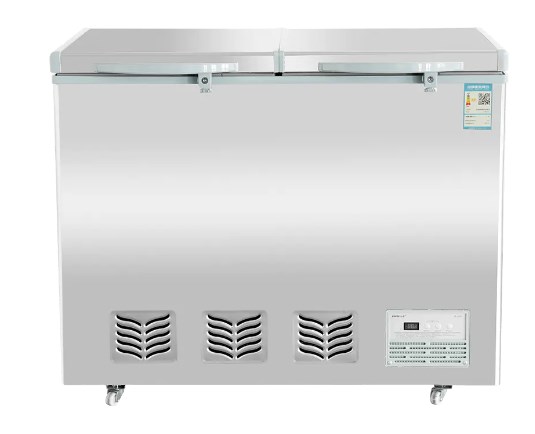
- Low-temperature freezing equipment, suitable for frozen meat, seafood and quick-frozen food, keeps stable low temperature to lock original taste and avoid nutrition loss.
- Constant temperature refrigeration cabinets, applied to fruits, vegetables and cooked food, slow down food oxidation and extend edible cycle.
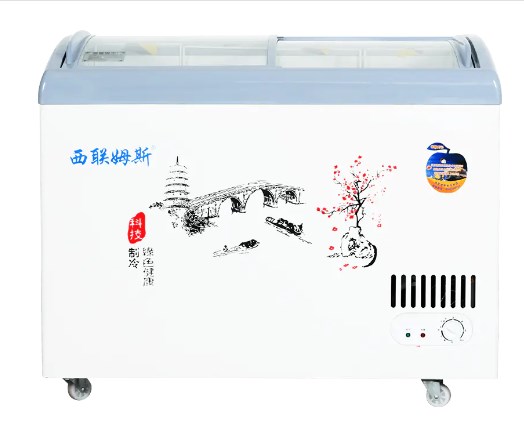
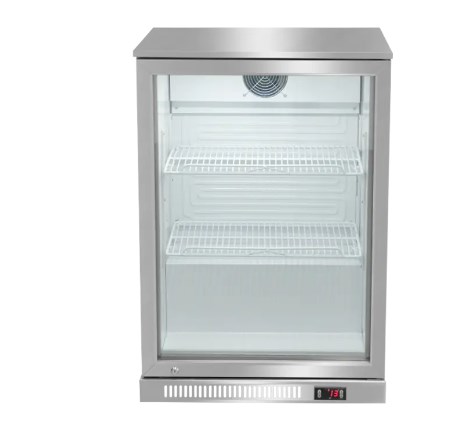
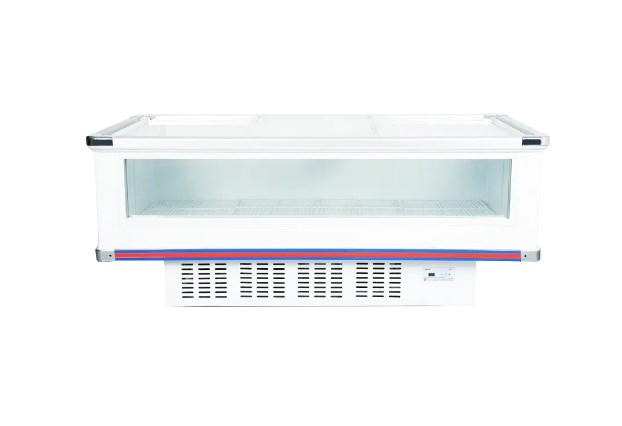
- Display refrigeration equipment, arranged in restaurant dining areas and lobby bars, showing drinks and snacks while maintaining fresh state.
Guest Room Refrigeration Facilities
Mini refrigerators equipped inside guest rooms belong to small-sized hotel refrigeration equipment, bringing convenient refrigeration service for staying guests. Guests can store personal beverages, fruits and leftover food, satisfying personalized daily storage needs. Such devices feature small occupied space, low running noise and simple operation mode, adapting to quiet rest environment of guest rooms.
Public Area Cooling and Refrigeration Systems
Large central refrigeration and air conditioning linkage systems cover hotel lobby, conference halls, swimming pools and leisure venues. The system adjusts indoor ambient temperature in real time according to outdoor weather changes and passenger flow volume, creating pleasant activity space. It differs from independent refrigeration equipment, realizing unified temperature control of large areas through pipeline circulation.
| Equipment Category | Main Usage Area | Core Working Feature | Daily Load Level |
|---|---|---|---|
| Kitchen Storage Refrigerator | Back Kitchen & Warehouse | Long-term constant temperature preservation | High load operation |
| Guest Room Mini Refrigerator | Guest Accommodation Room | Low noise intermittent work | Medium load operation |
| Central Refrigeration System | Hotel Public Zones | Large range temperature adjustment | Variable load operation |
Key Standards for Hotel Refrigeration Equipment Selection
Selecting proper refrigeration equipment is the premise to guarantee stable hotel service, selection work needs to combine actual service scale, functional layout and daily passenger flow volume of the hotel, instead of choosing devices blindly according to appearance and price. Multiple core indicators need comprehensive consideration to match long-term operational demands.
Cooling Capacity Matching Standard
Cooling capacity determines the working efficiency of refrigeration equipment. Hotels with larger catering service scale need refrigeration devices with stronger cooling capacity to cope with mass food storage demand. If cooling capacity is insufficient, internal temperature cannot reach preset standard, food will go bad easily, and equipment will keep running at overload status to accelerate aging speed. Equipping matched cooling capacity according to regional service volume can effectively avoid idle waste and insufficient power.
Energy Saving and Environmental Protection Performance
Refrigeration equipment belongs to high power consumption facility, cumulative power consumption becomes a major part of hotel daily operating cost. Energy-efficient refrigeration devices can effectively reduce power expenditure under identical cooling effect. Meanwhile, refrigerant used inside equipment must conform to public place environmental protection norms, avoiding harmful substance leakage which may threaten indoor air quality and staff physical health.
Durability and Adaptability
Hotel refrigeration equipment works for long hours all year round, facing frequent switch and frequent access of stored items. Device structure and material quality decide service life and failure frequency. Devices with strong environmental adaptability can keep stable performance under humid indoor kitchen environment and frequent temperature fluctuation, cutting down frequent replacement and maintenance cost in later period.
- Confirm daily maximum storage quantity to define required internal volume of refrigeration equipment.
- Check energy consumption grade and refrigerant compliance qualification of finished products.
- Test running noise and temperature control precision to fit hotel quiet service environment.
- Evaluate maintenance difficulty and spare parts universality for convenient later management.
Daily Maintenance and Fault Prevention Measures
Regular scientific maintenance can greatly prolong service life of hotel refrigeration equipment and reduce sudden shutdown failure. Most common equipment faults originate from daily neglected cleaning, improper use and untimely inspection. Forming standardized maintenance management system is an effective way to guarantee continuous and stable operation of refrigeration systems.
Routine Cleaning and Sanitation Management
Internal and external cleaning shall be conducted periodically aiming at refrigeration equipment in food storage areas. Residual food stains and water stains inside the cabinet will breed bacteria and peculiar smell, not only pollute stored food, but also block heat dissipation structure to lower refrigeration efficiency. External dust accumulation on equipment surface also affects normal heat exchange work. Daily cleaning work needs to follow safe operation rules, cut off power supply first to prevent electric safety risks.
Regular Inspection and Parameter Calibration
Management staff need to inspect running status of refrigeration equipment every day, observe whether temperature display stays within normal range, listen to running sound for abnormal noise, and check sealing strips for aging and air leakage problems. Temperature control parameters shall be calibrated regularly to guarantee actual internal temperature consistent with set value. Timely discovery of tiny abnormal conditions can prevent small problems evolving into large equipment failures.
Standardized Usage Specification Training
All staff contacting refrigeration equipment shall receive unified usage training. Random stacking of stored items cannot block internal air circulation channels, hot food cannot be put into refrigeration equipment directly, and frequent opening and closing of cabinet doors shall be reduced as much as possible. Standard operation habits can lighten equipment working load and maintain stable refrigeration effect for a long time.
For large central refrigeration systems, professional technical personnel shall be arranged to conduct deep maintenance at fixed cycles, detect pipeline sealing condition and compressor operating state, eliminate hidden troubles inside the system, and ensure refrigeration supply not interrupted in peak service period.
Development Trend of Modern Hotel Refrigeration Equipment
Driven by upgrading hotel service demand and technological progress, hotel refrigeration equipment is developing towards intelligence, high efficiency and integrated management. Traditional single cooling function can no longer satisfy diversified operational needs, new generation devices continuously optimize comprehensive performance to adapt to changing hotel industry environment.
Intelligent control technology gradually gets popularized in refrigeration equipment application. The system can automatically adjust operating power and temperature according to internal storage quantity and external environment temperature, realizing unattended intelligent operation. Meanwhile, remote monitoring function helps management personnel grasp running status of all refrigeration devices in real time, rapidly positioning abnormal equipment and improving troubleshooting efficiency.
Energy saving and low carbon become mainstream development direction. Optimized internal structural design and new type environmental refrigerant further cut unit power consumption. Integrated refrigeration and heat recovery design can reuse heat generated during refrigeration process for hotel hot water supply, lifting comprehensive energy utilization rate and reducing overall operating expenditure.
Besides functional promotion, equipment safety and sanitary protection design get more attention. Anti-bacterial internal materials, anti-leakage structure and safe power protection configuration effectively avoid food pollution and safety accidents. In the future, hotel refrigeration equipment will combine more practical technologies to offer more stable, economical and safe refrigeration support for hotel daily operation.
Related News

Looking for Reliable Partner?
We are committed to becoming your most trusted partner.
Contact info.
 +86-153 0659 4509
 +86-(0)573-8796 5558
 zjxingbao@gmail.com
 No. 10 Baisha Road, Lianhang Development Zone, Chang'an Town, Haining City, Zhejiang China 314423
Mobile QR Code
Copyright © Zhejiang Xingbao Electrical Appliance Co., Ltd. All Rights Reserved. Custom Commercial Refrigerator Factory
