

 en
en  English
 中文简体
中文简体 Español
 عربى
عربىHow to Choose the Right Commercial Freezer for Your Kitchen Layout?
 2026.06.01
 Industry News
Selecting the right commercial freezer is the most impactful decision for a foodservice operation's storage efficiency. Without appropriate freezing equipment, businesses risk inventory spoilage, health code violations, and significant financial losses. Commercial freezers are engineered to maintain temperatures well below freezing, preserving the integrity of meats, dairy, and prepared foods. Understanding the distinct advantages of various freezer configurations allows operators to optimize kitchen workflows, maximize limited space, and ultimately ensure customer satisfaction through consistently high-quality ingredients.
Upright Freezers
Upright freezers are characterized by their vertical footprint, making them exceptional for kitchens where floor space is at a premium. They feature spacious open shelving that allows for organized storage and immediate visual access to ingredients, significantly reducing the time staff spend searching for items. The primary configurations vary by compressor placement—top or bottom—and door style, typically solid or glass. This adaptability ensures the unit can integrate seamlessly with existing kitchen layouts, maintaining a smooth and efficient workflow during peak service hours.
- Key Advantages: Compact footprint, easy access to ingredients, consistent temperature maintenance, and energy efficiency.
- Best Applications: Restaurants, convenience stores, bakeries, and supermarkets.
Chest Freezers
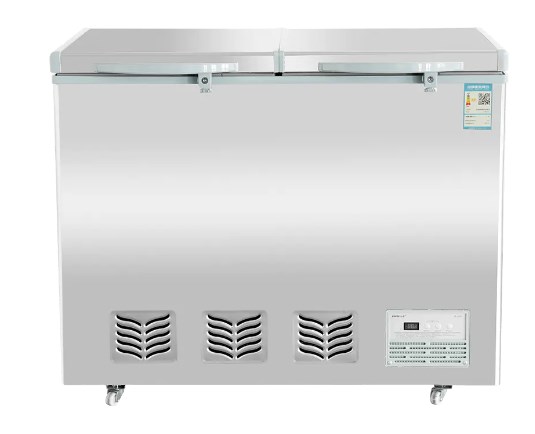
When bulk storage is the priority, chest freezers offer an unparalleled solution. Their horizontal design allows them to accommodate large, irregularly shaped items that cannot fit in upright models, such as whole turkeys or large bulk ingredient bags. A major distinct advantage is their exceptional temperature retention; in the event of a power outage, the dense, frigid air settles at the bottom, keeping food safe for extended periods. Many modern chest freezers also feature digital temperature displays and high-low alarms, providing an extra layer of security for valuable inventory.
- Key Advantages: Superior energy efficiency, massive bulk storage capacity, and excellent temperature retention during power failures.
- Best Applications: Convenience stores, catering companies, and high-volume restaurants.
Undercounter Freezers
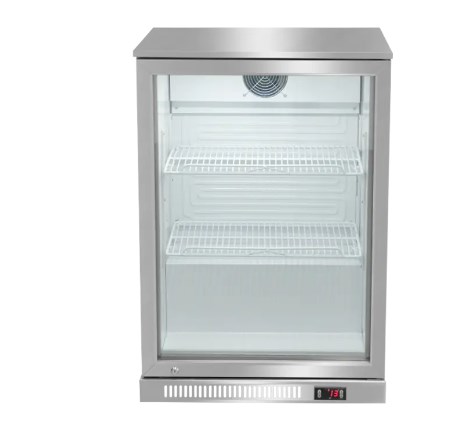
Undercounter freezers are the ultimate space-saving workhorses, designed to slide seamlessly beneath standard commercial prep tables. These units bring frozen ingredients directly to the chef's fingertips, eliminating unnecessary trips to walk-in coolers and thereby accelerating food preparation. They are available in versatile configurations, including solid doors, glass doors, or a combination of doors and drawers, allowing operators to customize access based on their specific workflow. Field-reversible door hinges further enhance their adaptability, ensuring they never obstruct kitchen traffic regardless of the layout.
- Key Advantages: Maximized space efficiency, immediate access during prep, and ergonomic workflow integration.
- Best Applications: Food prep stations and bar areas.
Merchandising Freezers
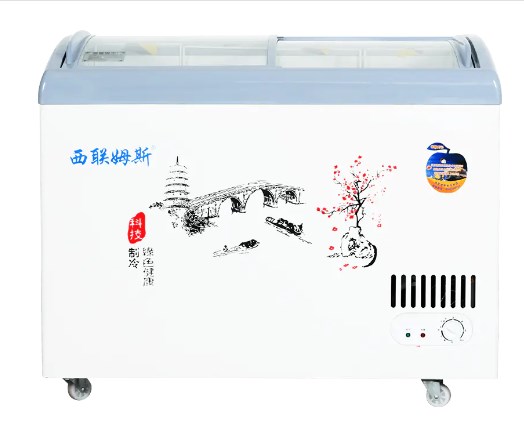
Merchandising freezers serve a dual purpose: reliable preservation and powerful product marketing. Characterized by their expansive glass doors and vibrant LED lighting, these units are built to showcase items and trigger impulse purchases. Available in multi-tier configurations, they transform frozen inventory into visual merchandising opportunities. Features like self-closing doors and electronic locks ensure that energy is conserved and inventory remains secure after hours, making them indispensable for retail-focused foodservice environments.
- Key Advantages: Drives impulse buying, maximizes product visibility, and enhances retail presentation.
- Best Applications: Convenience stores, supermarkets, and ice cream parlors.
Countertop Freezers
Countertop freezers are specialized, compact units engineered to sit directly on checkout counters or prep surfaces. Their primary function is to highlight high-margin, impulse-buy items like frozen novelties or ready-to-eat meals. Despite their small footprint, they offer surprisingly robust storage capabilities and feature attractive displays that draw the customer's eye. These units allow operators to capitalize on last-minute purchase decisions without sacrificing valuable floor or prep space.
- Key Advantages: Ultra-compact, boosts point-of-sale revenue, and highly visible product display.
- Best Applications: Cafes, coffee shops, and convenience stores.
Walk-In Freezers
For operations requiring massive cold storage, walk-in freezers are the foundational infrastructure. These units are essentially refrigerated rooms that allow staff to wheel in entire racks of ingredients on carts. They offer extensive customization, from indoor modular units to outdoor installations that free up interior kitchen space. Because they are built to scale, they are the only viable option for high-volume operations that receive large bulk deliveries and need to maintain organized, accessible inventory over long periods.
- Key Advantages: Enormous bulk storage, highly customizable layouts, and stable temperature control.
- Best Applications: Supermarkets, food manufacturers, and large hotels.
Portable Freezers
Portable freezers are rugged, mobile units designed for businesses that require cold storage on the move. Constructed from heavy-duty materials like polyethylene or steel, they can withstand the rigors of transport. They are indispensable for catering operations, mobile food trucks, and outdoor events. Equipped with digital controls and secure locking mechanisms, they ensure that perishable goods remain at safe temperatures even when away from a stationary power source, operating via battery or vehicle power adapters.
- Key Advantages: Maintains product integrity during transport and offers mobile convenience.
- Best Applications: Catering services, food distribution, and event management.
Commercial Freezer Comparative Overview
| Freezer Type | Core Benefit | Ideal Environment |
|---|---|---|
| Upright | Organized accessibility | Space-constrained kitchens |
| Chest | Bulk capacity & cold retention | High-volume storage areas |
| Undercounter | Workflow efficiency | Prep lines and bars |
| Walk-In | Massive scale & customization | Industrial food processing |
Commercial Freezer Frequently Asked Questions
How cold can commercial freezers get?
Commercial freezers are engineered to maintain temperatures well below freezing to ensure the long-term preservation of highly perishable goods. Most units operate effectively between negative ten and negative twenty degrees Fahrenheit. This extreme cold is absolutely vital for halting bacterial growth and preventing cellular degradation in meats and dairy, ensuring food safety compliance and extending the shelf life of inventory far beyond standard refrigeration capabilities.
What refrigerants are used in commercial freezers?
Commercial freezers typically utilize one of several common refrigerants, each with distinct operational and environmental profiles. Hydrofluorocarbon refrigerants are traditionally valued for their high efficiency and robust cooling power. However, the industry is rapidly shifting toward more environmentally conscious options. Hydrocarbon refrigerants, for example, have minimal environmental impact and superior energy efficiency, making them the increasingly preferred choice for businesses looking to reduce their carbon footprint while maintaining optimal cooling performance.
How long do commercial freezers last?
The average commercial freezer has a lifespan ranging from ten to twenty years. This wide variance depends heavily on the intensity of daily use and the rigor of maintenance routines. Units that undergo regular preventative maintenance—specifically the cleaning of condenser coils and the inspection of door gaskets—consistently reach the upper end of this lifespan. Proactive maintenance is the most critical factor in protecting the equipment investment, ensuring the unit operates efficiently without devastating breakdowns during peak service periods.
Related News

Looking for Reliable Partner?
We are committed to becoming your most trusted partner.
Contact info.
 +86-153 0659 4509
 +86-(0)573-8796 5558
 zjxingbao@gmail.com
 No. 10 Baisha Road, Lianhang Development Zone, Chang'an Town, Haining City, Zhejiang China 314423
Mobile QR Code
Copyright © Zhejiang Xingbao Electrical Appliance Co., Ltd. All Rights Reserved. Custom Commercial Refrigerator Factory
