

 en
en  English
 中文简体
中文简体 Español
 عربى
عربىSeafood Refrigerator Display Case Buying Guide: Temperatures, Glass, and Energy Use
 2026.09.23
 Industry News
A seafood counter faces a harder job than a deli case. The product arrives near 0°C, customers repeatedly open the glass, and melted ice drains into the drip tray. The seafood refrigerator display case you pick has to hold that product at a safe temperature, not just look cold.
Fresh fish and shellfish lose quality fast unless the case is matched to the load. Zhejiang Xingbao Electrical Appliance Co., Ltd., the manufacturer behind the Xingbao brand, builds dedicated seafood display cabinets for fish markets, supermarkets, and restaurant counters. This guide uses that kind of operator experience to cover temperature requirements, cabinet styles, specifications, energy use, and on-site verification.
Fresh seafood is not a 4°C product. A seafood refrigerator display case has to hold product temperature close to 0°C, even while the counter door slides open.
What Makes a Seafood Refrigerator Display Case Different From a Beverage Chiller
A seafood refrigerator display case must control product temperature near 0°C and manage humidity, not simply circulate air at 4°C.
Beverage chillers usually run at 4-6°C and remove moisture from the air. Seafood cases use larger evaporators, lower air velocity, and more frequent defrost cycles because water from ice and packaging enters the cabinet all day. Without that design, case air may read 4°C while the fish on the top tray spends hours at 6°C.
-1°C to 2°CFresh seafood core target
4°CMaximum air temperature during defrost
15 minRecovery time after door opening
90% RHHumidity that slows surface drying
| Product | Core temperature target | Maximum case air temperature | Typical display |
| Fresh fish on ice | -1°C to 1°C | 4°C | Open or glass-door |
| Shucked shellfish | 2°C to 4°C | 6°C | Service counter |
| Smoked seafood | 0°C to 2°C | 4°C | Glass-door |
| Frozen seafood | -18°C or below | -15°C | Island or reach-in |
The FDA danger zone begins at 4°C. For seafood, set the case 1°C to 2°C below the product target so the load stays out of that zone.
Seafood Refrigerator Display Case Styles: Open Front, Glass Door, Island, or Service Counter
The serving model decides the style. Self-service displays need high visibility and separation from customers; full-service counters need a low-profile work surface and protected trays.
Self-service
Open-front or glass-door cases let shoppers pick and pack. Glass doors cut energy use but require the case to be stocked from the rear.
Full-service
Counter-height cases with a prep rail or lid keep fish behind the counter and give the fishmonger room to weigh, fillet, and wrap.
| Style | Product visibility | Temperature stability | Relative energy use | Best for |
| Open front | High | Moderate | Higher | High-traffic self-service |
| Glass door | Good | High | Lower | Deli and packaged seafood |
| Island freezer | High | High | Medium | Frozen seafood displays |
| Service counter | Medium | Moderate to high | Medium | Full-service fish counters |
The service-counter layout changes the case shape. A stainless, air-cooled seafood cabinet under a prep rail keeps trays within arm's reach and handles frequent opening better than a standard reach-in. For operators who need that style, Xingbao's luxury white freezer seafood cabinet is built for high-humidity seafood loads.
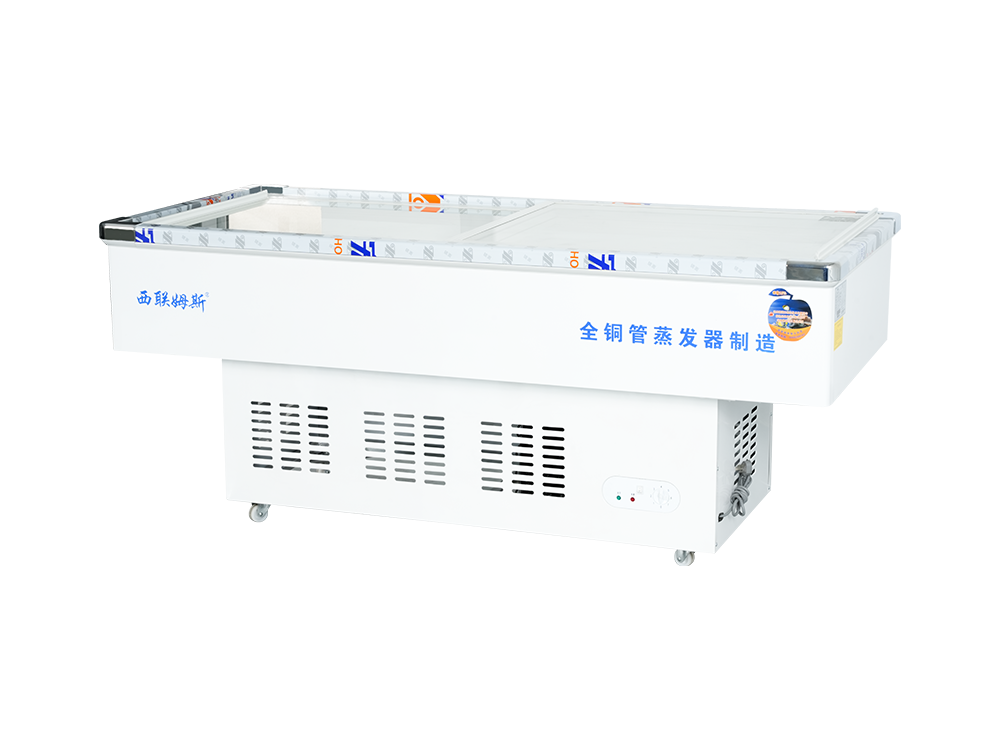 Xingbao Luxury White Freezer Seafood Showcase CabinetThis stainless, air-cooled seafood cabinet with a prep rail suits high-humidity loads and frequent service-counter openings. Its advanced cooling, large capacity, and smart controls help maintain temperature during busy hours.View Product →
Restocking can raise case air temperature by 3°C to 4°C for several minutes. A case that recovers quickly matters more than the lowest initial price.
Specifications That Decide a Seafood Display Case's Performance
Compare the evaporator, defrost method, glass, and compressor before comparing price. These parts define whether the case holds temperature during busy hours or forces expensive service calls.
- Air-cooled evaporator with low air velocity: leads to even tray temperature and less surface drying.
- Electric defrost rather than off-cycle: clears ice without long temperature swings.
- Double-glazed low-E glass: reduces condensation and radiant heat gain.
- Compressor in a ventilated base: makes cleaning easier and keeps condenser air from recirculating.
- Oversized drain and drip tray: prevents melt water from pooling under packaged fish.
Before choosing, review the commercial display freezer energy guide on this site; it explains how the same specifications influence running costs.
For compact counters and sushi takeaway stations, a desktop seafood cabinet uses the same sealed glass logic in a smaller footprint. Xingbao's new desktop freezer seafood cabinet is one option that fits this sales point without taking floor space.
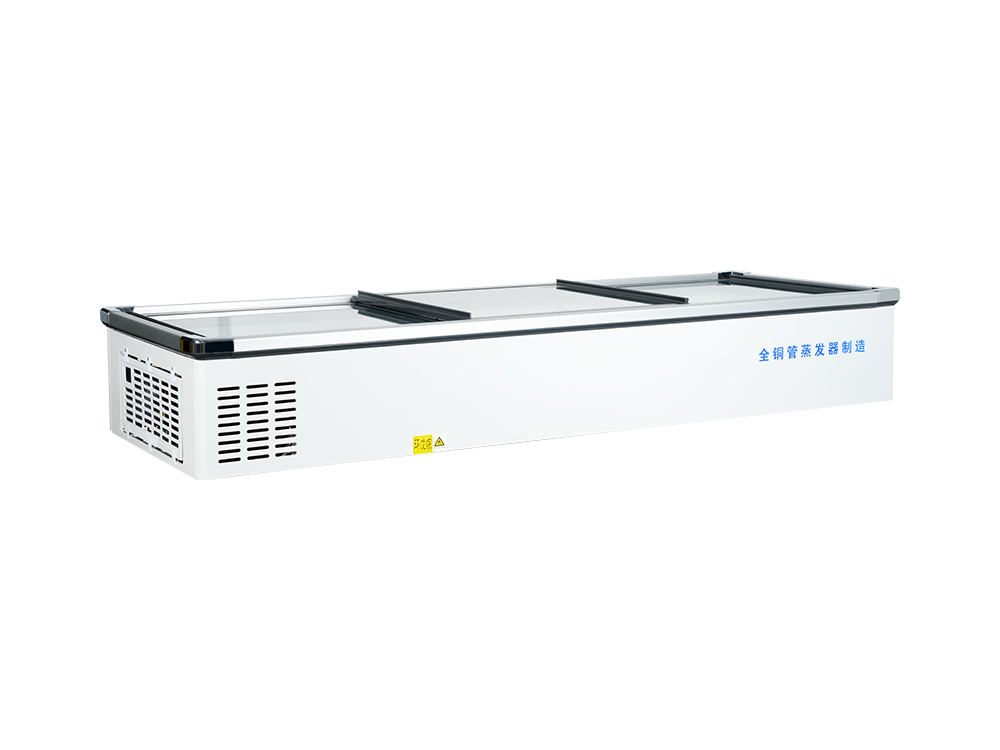 Xingbao New Desktop Freezer Seafood ShowcaseA compact desktop option for counter and sushi stations, using efficient cooling and intelligent temperature control in a small footprint. Its low energy use and easy-to-clean interior make it practical for tight spaces.View Product →
Ask the supplier for the case's rated energy consumption under ISO 23953 conditions, not just the compressor size. The evaporation load and glass performance decide the annual cost.
Energy Use and Operating Cost of Seafood Refrigerator Display Cases
Running cost is set by glass area, door openings, defrost frequency, and humidity. Two physically identical cabinets can have 20-30% different annual energy use because of fan placement, glass coating, and controller settings.
A glass-door case typically uses less energy than an open front because the compressor does not fight ambient humidity and radiant heat all day. Cabinet suppliers usually quote 20-30% energy savings for doors, but the figure depends on your location and how often the door is opened.
The best energy upgrade for a seafood display case is a correctly sized load. An overstocked case blocks air return and makes the compressor run longer, while a half-empty case wastes space and money.
How to Validate a Seafood Refrigerator Display Case Before You Commit
Never trust the spec sheet alone. Run a 24-hour temperature mapping test with packaged product simulators and realistic door openings.
- Place loggers at the top tray, middle rack, bottom pan, and drain.
- Load the case to its intended display capacity.
- Open the door or curtain 20 times per hour for two busy cycles.
- Record two defrost cycles and note the maximum temperature rise.
- Measure the recovery time from door-open peak to below 2°C.
Recovery time is the minutes a display case needs to return to its target product temperature after a door opening or restocking. For fresh seafood, 15 minutes or less under normal traffic is a practical benchmark.
If your counter dimensions or drainage points are unusual, send your layout to Xingbao before ordering; a small change in case width can change the refrigeration design.
Seafood Display Case Maintenance and Hygiene Essentials
Set a fixed cleaning schedule because seafood cases fail gradually. A clogged drain or a peeling gasket can sabotage temperature before the panel shows an alarm.
- Daily: clear the drip tray and flush the drain line with mild sanitizer.
- Weekly: check door gaskets and glass seals for gaps, ice, or food residue.
- Monthly: vacuum the condenser coil and verify air-in and air-out temperatures.
- Quarterly: inspect the defrost heater, drain heater, and fan blades for ice damage.
A sealed glass line with no fogging is the first sign the case is running correctly; persistent condensation on packaged fish means the humidity balance is off.
Frequently Asked Buying Questions
Three questions decide most seafood display case purchases: temperature setting, door style, and whether a beverage case can be substituted for a seafood unit.
What temperature should a seafood refrigerator display case be set to?
Set the air temperature 1°C to 2°C lower than the core target. Fresh fish needs core temperature near 0°C, so a case set to 2°C is a safe starting point.
Is a glass-door seafood display case better than an open-front case?
For packaged or pre-weighed seafood, yes. Glass doors improve temperature stability and reduce energy use. For self-service fresh fish on ice, an open front may sell faster, but it needs more defrost and cleaning.
Can a regular beverage display case be used for seafood?
Not recommended. Beverage cases run at 4°C to 6°C and lack the evaporator capacity and drainage to handle ice, water, and frequent loading. The result is shorter shelf life and more temperature alarms.
How often should a seafood display case be defrosted?
Most air-cooled seafood cases run two to four electric defrost cycles per day on a timer; you confirm the correct interval by watching the temperature rise during defrost and checking ice buildup.
Rule of thumb: if the case cannot hold core temperature below 2°C for four consecutive hours, the refrigeration system is undersized or the maintenance schedule is behind.
Related News

Looking for Reliable Partner?
We are committed to becoming your most trusted partner.
Contact info.
 +86-153 0659 4509
 +86-(0)573-8796 5558
 zjxingbao@gmail.com
 No. 10 Baisha Road, Lianhang Development Zone, Chang'an Town, Haining City, Zhejiang China 314423
Mobile QR Code
Copyright © Zhejiang Xingbao Electrical Appliance Co., Ltd. All Rights Reserved. Custom Commercial Refrigerator Factory
