

 en
en  English
 中文简体
中文简体 Español
 عربى
عربىLong Island Freezer Buying Guide: Specs, Energy Costs, Layout & Sourcing
 2026.09.16
 Industry News
Walk the frozen-food aisle of a supermarket during a July heat wave and watch how customers use island merchandisers. They pull a glass lid open, reach in, close it, and move on. Stores that keep that motion efficient share one piece of equipment: a long island freezer built as a continuous display run instead of a row of separate chests. One 2.5-meter island cabinet replaces two 1.3-meter units, halves the compressor count, and cuts the aisle footprint by roughly 15% while holding the same number of SKUs.
The name is about the cabinet, not the geography. In commercial refrigeration, a long island freezer is a merchandiser sized to run down the middle of a sales aisle, and choosing one is a category-management decision as much as an equipment purchase. The specification sheet drives energy bills, food-safety audit results, and how many product facings you can offer per linear meter. This guide covers the specifications that matter, the energy math behind the price tag, layout rules for safe loading, and how to source these units directly from an established manufacturer with export experience.
What Counts as a Long Island Freezer and Where It Works Best
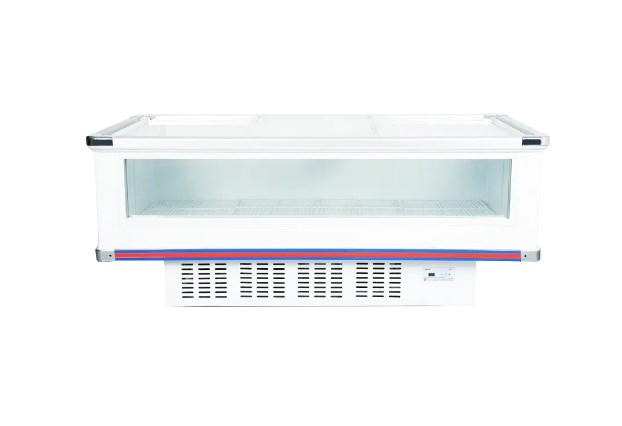
A long island freezer is a self-contained refrigerated merchandiser with an elongated, island-style footprint, typically 2.0 to 3.2 meters long, accessible from both sides, and topped with hinged or sliding glass lids.
Most units maintain frozen-food temperatures of -18 to -22 degrees C. Fan-assisted evaporators distribute cold air across the base tray, and the cabinet is engineered for continuous duty in 25-degree retail environments. The geometry matters more than the volume number: the length-to-width ratio is usually above 2:1, which lets you create a continuous run of facings along both aisle sides.
Definition: In specification terms, a long island freezer combines three characteristics - a length-to-width ratio above 2:1, top-access merchandising through glass lids, and an integral or remote refrigeration system sized for 24/7 retail operation.
Long island freezers earn their floor space when:
- You need product facings on both sides of a center aisle.
- SKU count is high and each SKU moves at moderate volume.
- Staff benefit from top-loading access for rapid restocking.
- The store plan relies on center-aisle merchandising rather than wall line-ups.
Five Long Island Freezer Specifications That Decide Performance
Five specification groups determine whether a long island freezer holds temperature under real store conditions: effective volume, climate class, defrost method, glass lid type, and energy draw.
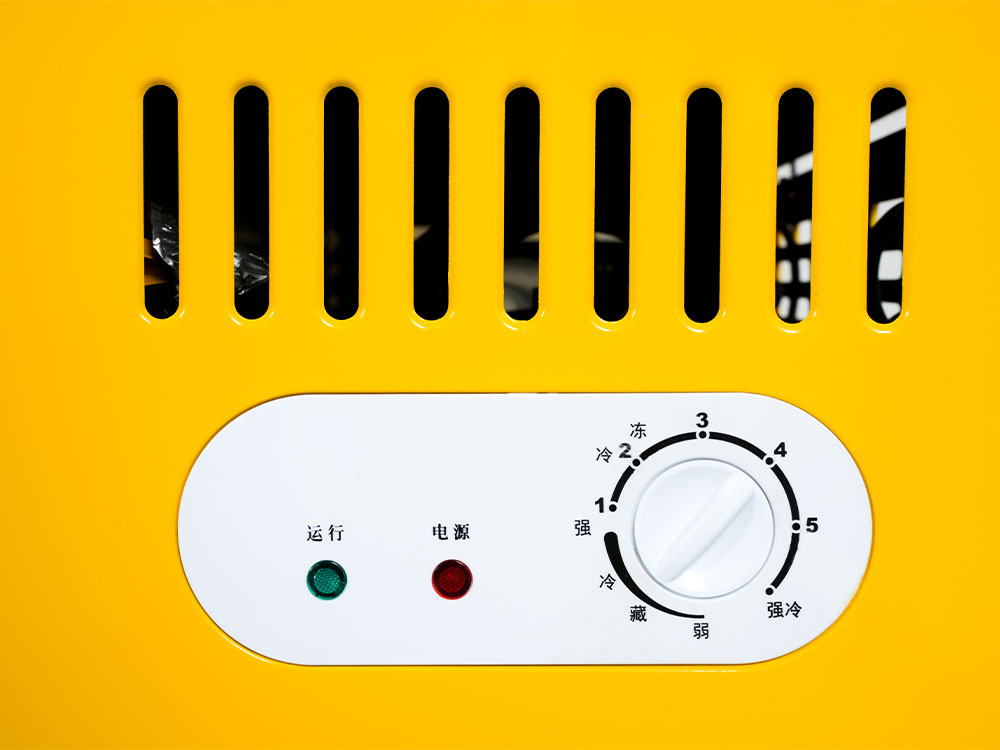
The volume figure on the catalog is gross capacity. What matters in the store is usable volume after the evaporator plenum and the recommended load line are subtracted. A 1,200-liter unit with a 600 mm internal width gives roughly 4.5 square meters of usable base tray area, which translates into about 90 standard 2.5 kg retail packs on the floor of the cabinet.
| Configuration | Length | Usable volume | Temperature band | Typical retail setting |
| Compact island | 2.0 m | 850-950 L | -18 to -22 degrees C | Small-format stores and convenience |
| Standard glass-lid island | 2.5 m | 1,150-1,300 L | -18 to -22 degrees C | Mid-size supermarkets |
| Extended island | 3.2 m | 1,500-1,700 L | -22 to -25 degrees C | High-traffic hypermarkets |
For a practical breakdown of island cabinet layouts and selection criteria, the long freezer island cabinet buying guide in our knowledge base covers the full range of configurations.
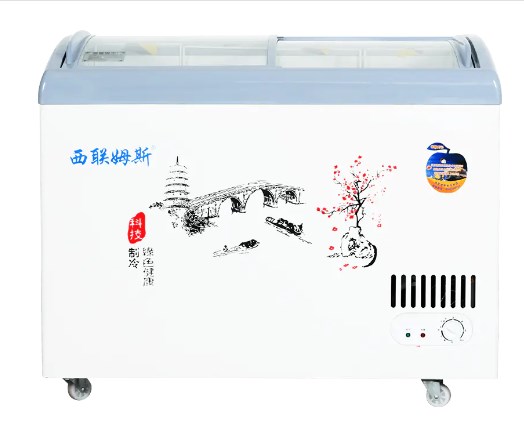
 European-Style Aluminum-Edged Long Freezer Island CabinetThis extended freezer island cabinet combines European styling with aluminum-alloy edging for durability, offering ample bulk frozen storage for supermarkets and high-volume display needs.View Product →
Check these five items before comparing prices:
- Usable volume, not gross volume. Ask for the specification sheet with the load line marked; compare based on the volume you can actually fill with product.
- Climate class. Class 4 units handle 30-degree ambient stores; Class 5 units are rated for 40-degree environments. Installing a Class 4 unit in a hot service corridor is a common failure.
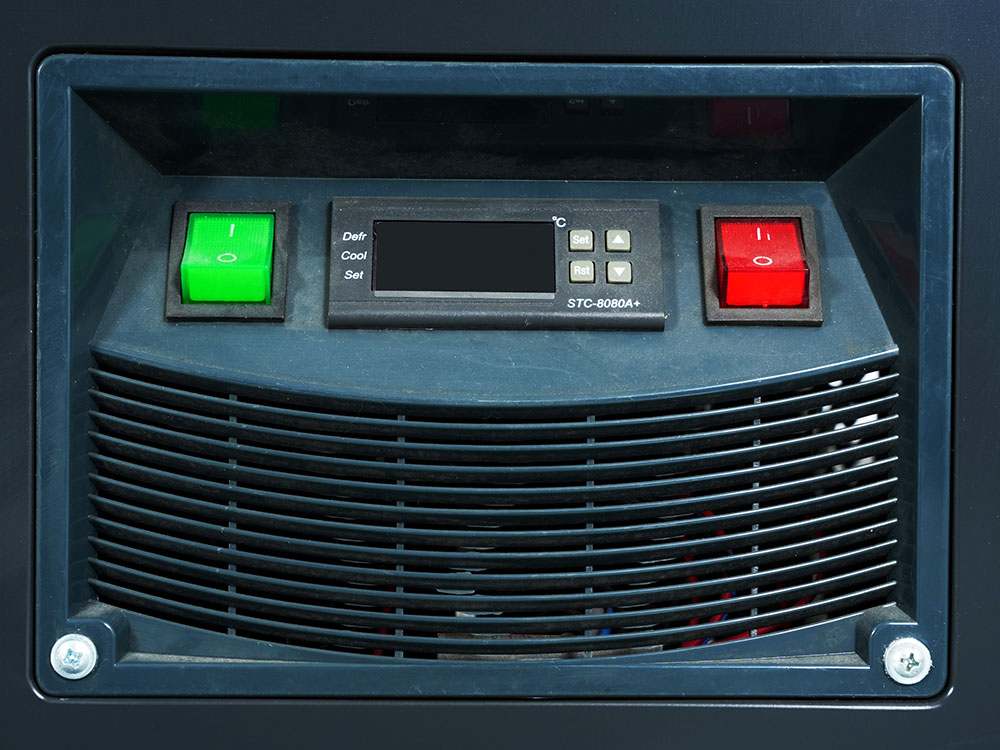
- Defrost method. Electric defrost is simple and reliable; hot-gas defrost is faster but adds compressor complexity and cost.
- Glass lid type. Double-glazed low-E lids reduce radiant heat gain and condensation far better than single glass.
- Energy draw. Rated kWh/24h tells you the steady-state consumption; expect real-store usage to be 25-40% higher due to door openings and stocking patterns.
Buying tip: ask the supplier for a performance test report measured at 25 degrees C ambient, not 20 degrees C. The 5-degree gap hides the difference between a compliant unit and a marginal one.
Energy Costs: What a Long Island Freezer Actually Consumes
A 2.5-meter glass-lid long island freezer typically draws 3,600 to 4,000 kWh per year in a 25-degree store, which works out to 720 to 800 US dollars per year at a blended commercial rate of $0.20 per kWh.
3,620 kWhannual draw, 2.5 m glass-lid island
$724yearly cost at $0.20 per kWh
40-60%infiltration cut with glass lids vs open top
Assumes 14 h equivalent compressor run per day, -18 degrees C set point, and 25 degrees C ambient with typical door-open events.
Glass lids are the single biggest energy lever on a long island freezer. An open-top unit of the same length lets cold air spill out and humid air fall onto the product; covering the opening reduces infiltration losses by 40-60% in real stores. Night covers add a further 15-25% reduction because they block radiant heat from reaching the product surface overnight.
Energy rule of thumb: divide the manufacturer's rated kWh/24h by 0.7 to estimate real-store consumption, then multiply by your blended electricity rate. That operating number, not the purchase price, dominates total cost of ownership after the second year.
Layout and Loading Patterns That Protect Food Safety
Layout and loading discipline matter as much as the specification sheet: a correctly stocked long island freezer keeps every package within 2 degrees C of the set point from opening to closing.
The cabinet position determines the thermal load before the compressor even starts. Place the unit away from direct sunlight, refrigeration discharge grilles, and bakery ovens. A minimum of 2.4 meters of aisle width on the long side lets two shopping carts pass, and the floor must be level within 3 mm over the full length so the glass lids close without stress.
- Pre-cool the cabinet to operating temperature, -18 to -20 degrees C, before the first stock load.
- Load in batches below the marked load line so air can circulate across the entire base tray.
- Rotate by use-by date and keep older stock at the front; never stack more than three layers of 2.5 kg retail packs.
- Close lids gently and repair cracked glass or worn gaskets immediately; a 3 mm gap can double local energy consumption.
- Check the defrost drain daily. A blocked drain produces ice buildup and temperature drift in the corners, which fails food-safety audits.
Load-line rule: never stack product above the manufacturer's load line. Blocked air circulation above the load causes temperature drift that thermostats cannot compensate for.
If your store needs flexibility, a combined island cabinet built from modular sections lets you reconfigure the run when the category plan changes. You can also browse the island freezer product range at Zhejiang Xingbao Electrical Appliance Co., Ltd. before you commit to a floor plan.
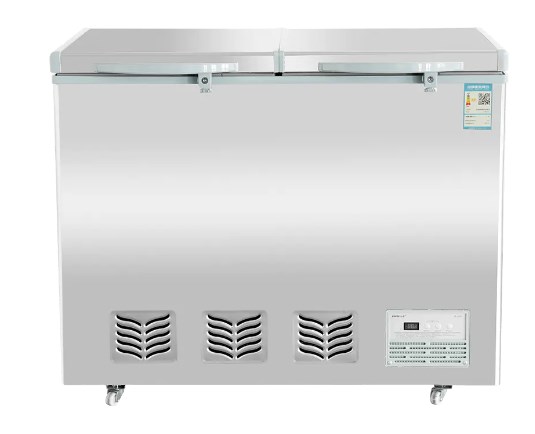
 Modular Combined Freezer Island Showcase with Electronic DefrostBuilt from modular sections, this island freezer offers flexible reconfiguration for changing floor plans, plus electronic defrost and space-efficient shelving for supermarkets and restaurants.View Product →
Sourcing Island Freezers Direct from the Manufacturer
Buying a long island freezer directly from an export manufacturer typically cuts the unit cost by 20-35% compared with regional distributor pricing, provided the specification is correct and freight and lead time are planned properly.
Zhejiang Xingbao Electrical Appliance Co., Ltd. is a commercial refrigeration manufacturer with 21 years of industry experience, a 300,000-unit annual production capacity, and factories near Shanghai and Ningbo ports. Xingbao produces island freezers, display cabinets, back bar coolers, and prep tables in its own two industrial bases, which keeps quality control and shipping under one roof. The company holds CCC, CE, and CFCC certifications and operates an in-house test lab, so custom voltage and dimension requests can be validated before series production. Direct sourcing of this kind also opens the door to private branding and modified dimensions that distributors rarely support.
RFQ checklist for a 40-foot container order: nominal voltage and frequency, climate class, number of glass lids and glazing type, defrost control, refrigerant type and charge, packaging standard for ocean freight, and a two-year spare parts list including gaskets and thermostats.
Typical export lead times for island freezers run 40 to 60 days from order confirmation to loading. The proximity of the factory to Shanghai and Ningbo keeps inland transport short, and landed costs on the U.S. East Coast remain competitive even for a single-container first order.
Frequently Asked Questions
What temperature should a long island freezer maintain?
Set the cabinet to -18 degrees C for standard frozen foods and -22 degrees C or lower for ice cream and seafood. Verify the actual temperature at the warmest corner, usually the front edge near the lid hinge, with an independent probe rather than the controller reading.
How many kWh does a long island freezer use per day?
A 2.5-meter glass-lid unit with double-glazed lids typically consumes 9 to 11 kWh per day in a 25-degree store. Open-top units and single-glazed lids push that number toward 14 to 16 kWh for the same length.
Can one long island freezer hold ice cream and frozen meat together?
Yes, if the cabinet has stable pull-down capability and you use dividers or baskets. Ice cream needs a colder spot, so load it nearest to the evaporator outlet and keep meat packs low. Monitor both zones for the first week to confirm the temperature split.
How long does a commercial island freezer last?
With regular maintenance, a commercial long island freezer lasts 10 to 15 years. Replace worn gaskets, keep the condenser coil clean, and check the defrost drain weekly; these three tasks prevent most premature compressor failures.
Related News

Looking for Reliable Partner?
We are committed to becoming your most trusted partner.
Contact info.
 +86-153 0659 4509
 +86-(0)573-8796 5558
 zjxingbao@gmail.com
 No. 10 Baisha Road, Lianhang Development Zone, Chang'an Town, Haining City, Zhejiang China 314423
Mobile QR Code
Copyright © Zhejiang Xingbao Electrical Appliance Co., Ltd. All Rights Reserved. Custom Commercial Refrigerator Factory
