

 en
en  English
 中文简体
中文简体 Español
 عربى
عربىCommercial Chest Freezer Buying Guide: Sizing, Temperature & Efficiency
 2026.09.09
 Industry News
A 1,000-liter spec sheet tells you nothing about how long your kitchen stays food-safe during a rush. A commercial chest freezer earns its keep through usable capacity, pull-down speed, and recovery under real load, not through the gross volume printed on the door label. Many operators discover this only after a summer weekend, when the cabinet that looked enormous in the showroom cycles constantly and never pulls back below -18°C. This guide covers the four buying decisions that turn a cabinet into an asset or an operating cost: capacity math, temperature performance, energy use, and configuration.
Sizing a Commercial Chest Freezer by Usable Capacity
Plan for at least 25 percent less usable space than the gross capacity printed on the label.
Gross capacity measures the entire interior volume, but evaporator coils, basket rails, and the manufacturer's load line consume part of it. In practice, a commercial chest freezer delivers 70 to 80 percent of its nominal volume as genuinely usable storage. A 600-liter cabinet will accommodate roughly 420 to 480 liters of product once baskets and airflow clearance are accounted for.
A 600 L commercial chest freezer typically delivers 420 to 480 L of usable storage. Size for that number, not the marketing figure.
Kitchen planners commonly use 60 to 80 liters of frozen storage per 100 covers, assuming a three- to five-day inventory rotation. A kitchen serving 200 covers a day should evaluate 500 to 700 liters of gross capacity before applying the 25 percent discount. If you store bulky items such as whole birds, large seafood boxes, or stacked pastry trays, add 30 percent more volume, because irregular shapes waste cubic space.
| Operation type | Weekly frozen inventory | Recommended capacity |
| Coffee shop or bakery | 150 to 250 L | 300 to 400 L |
| Casual restaurant | 300 to 450 L | 450 to 700 L |
| Catering or central kitchen | 500 to 800 L | 800 to 1,200 L |
| Convenience store or market | 800 L or more | 1,200 L plus |
Temperature Performance: Pull-Down and Recovery Decide Safety
Pull-down speed and recovery after warm loading matter more for food safety than the lowest temperature an empty cabinet can reach.
The storage setpoint for frozen food is -18°C, and commercial chest freezers are normally set between -21°C and -25°C to create a safety margin. Pull-down time, the period needed to move the interior from ambient to setpoint, is the first specification to check. A typical 400-liter commercial chest freezer pulls down from 25°C to -18°C in 1.5 to 2.5 hours when empty. The harder number is recovery. Loading 50 kg of room-temperature meat can raise the interior temperature by 10 to 15 degrees, and a cabinet with an undersized compressor needs 6 to 12 hours to recover. During those hours, product surface temperature sits inside the microbial growth range.
Definition: Pull-down time is the interval a freezer needs to move from ambient temperature to setpoint. Recovery time is the interval needed to return to setpoint after warm product is added or the lid is opened.
Four specification points determine how a chest freezer behaves under load:
- Super-freeze switch forces continuous compressor operation for two to four hours to lock in freshly loaded product.
- Insulation thickness of 60 to 80 mm of high-density foam is standard in commercial-grade cabinets and cuts heat gain substantially.
- Climate class matters: a unit rated for 32°C ambient will cycle more often in an unair-conditioned kitchen than one rated for 38°C.
- Door seal integrity: a warped or dirty gasket adds compressor runtime, frost build-up, and temperature drift.
Energy Efficiency: The Five-Year Cost of a Commercial Chest Freezer
Electricity, not the purchase price, is the largest cost of owning a commercial chest freezer.
Chest freezers beat upright cabinets on energy because cold air sinks. When the lid opens, the heavy cold air stays inside instead of spilling onto the floor. Across equal volumes, a solid-lid chest freezer typically uses 30 to 40 percent less electricity than an upright reach-in. Zhejiang Xingbao Electrical Appliance Co., Ltd., a manufacturer with 21 years of commercial refrigeration experience, rates several models in its chest freezer line at the European A+ energy level, which lowers monthly bills for operators running units around the clock.
The cost model is easy to test. A 400-liter chest freezer consuming about 300 kWh per year at $0.15 per kWh costs roughly $45 annually. Over five years, that is $225, about half of what a glass-door display freezer of the same volume would consume. The chart below compares the weekly running cost of three cabinet styles at the same volume and tariff.
Weekly operating cost by cabinet style (400 L at $0.15/kWh)
Solid-lid chest$1.90
Upright reach-in$2.80
Glass-door display$4.20
30-40%less energy than upright freezers
$45/yrto run a 400 L A+ chest freezer
-18°Cminimum frozen storage setpoint
Chest Freezer vs. Upright: Match the Form Factor to Access Frequency
Choose a chest for dense bulk storage and energy savings; choose an upright when staff reach into the cabinet continuously during service.
This decision is a trade-off, not a quality contest. The operating pattern of the kitchen determines which side wins.
Choose chest when
- Dense storage of boxes and bulk proteins is the priority.
- Energy budget is tight; a 24/7 appliance multiplies every kilowatt-hour.
- Power stability is uncertain; cold air stays inside an open chest.
- Price per liter must stay low for large volumes.
Choose upright when
- Pick frequency is high; staff open the door dozens of times an hour.
- Organization matters; shelves and baskets reduce digging.
- Floor space is narrow; uprights use vertical space instead.
- Ergonomics matter; no bending to reach bottom baskets.
| Attribute | Chest freezer | Upright freezer |
| Energy use per liter | Lower by 30 to 40 percent | Higher |
| Cold retention when open | Excellent | Moderate |
| Storage density per square meter | Higher | Lower |
| Organization and access | Bending and stacking required | Shelves at eye level |
| Price per useful liter | Lower | Higher |
When volume is high and turnover is slow, the chest wins on every measurable cost line. When every order pulls a different item, the upright pays for itself in labor time and floor organization.
Commercial Chest Freezer Applications: Three Configurations for Three Jobs
Retail merchandising, back-of-house bulk freezing, and seafood display each need a different chest freezer configuration even when the outer cabinet looks similar.
Retail display with a curved glass lid
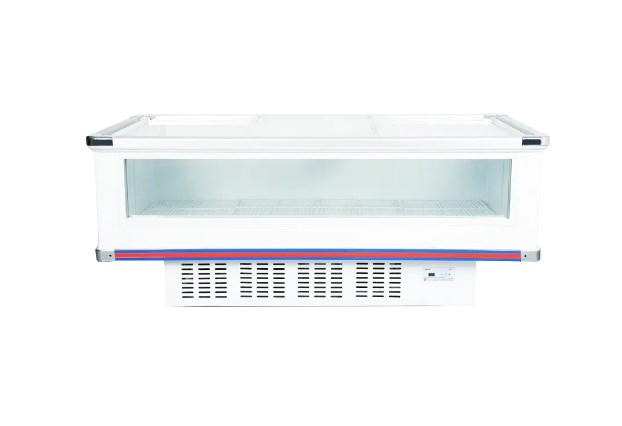
Curved glass chest freezers turn storage into merchandising. Customers see the product without opening the lid, which preserves the cold chain and lifts impulse purchases. Xingbao builds this configuration with low-temperature glass and a balanced lid mechanism for convenience stores and ice cream shops.
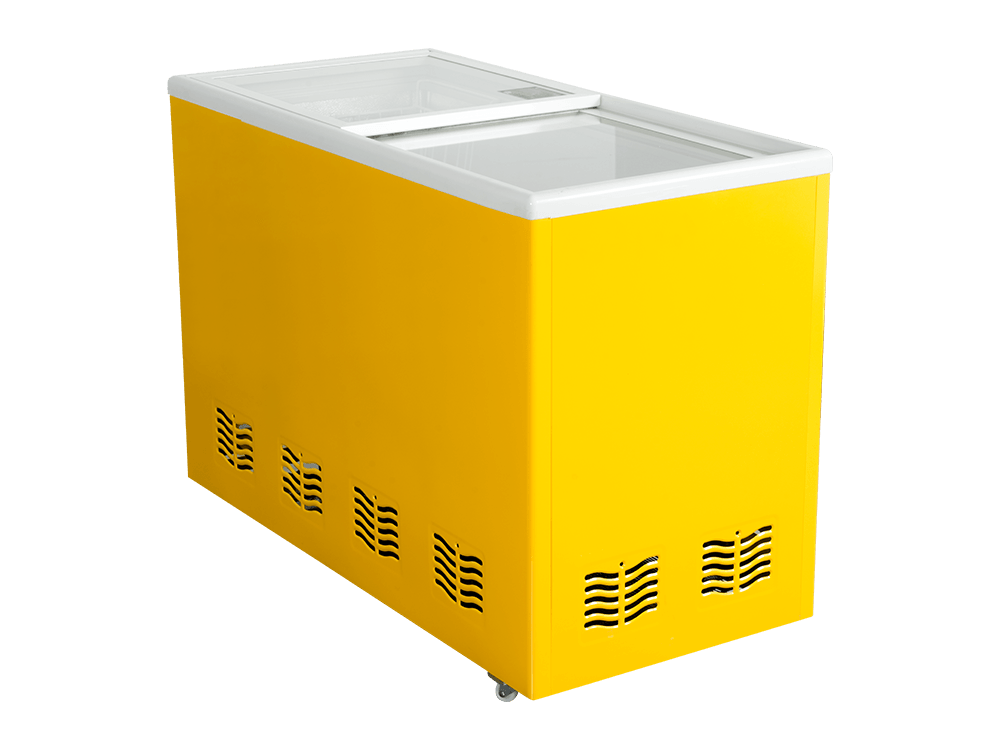 Curved Glass Chest Freezer with Balanced Lid for RetailThis curved glass freezer offers clear product visibility while keeping cold air sealed, supporting impulse sales in convenience stores and ice cream shops with low-temperature glass and a balanced lid mechanism.View Product →
Glass-door freezers for high-traffic retail
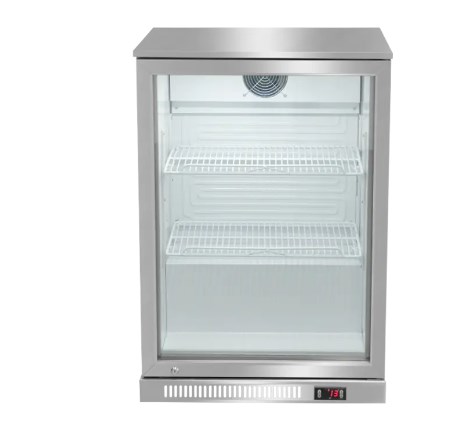
Glass-door chest freezers show packaged goods clearly while keeping cold air sealed behind a vertical door. They suit grab-and-go frozen lines where customers need to identify an item quickly, from dumplings to finished desserts.
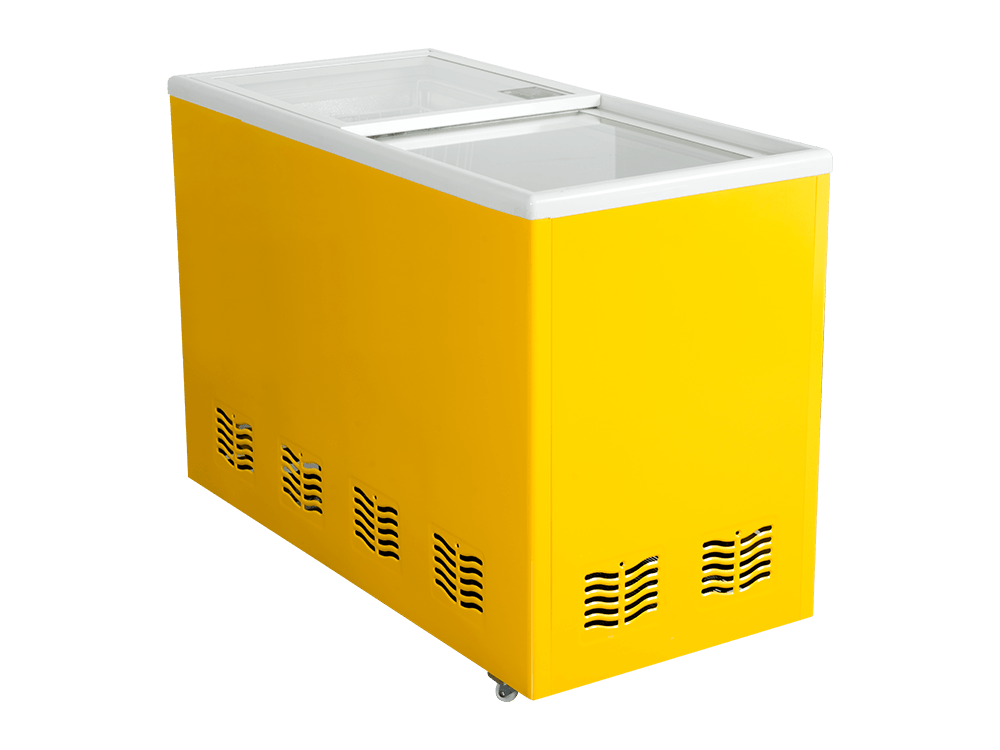 Compact Glass Door Freezer with Dual or Single TemperatureAvailable in dual-temperature and single-temperature models, this compact freezer suits small supermarkets and kitchens, featuring plastic edging and food-grade interior materials for safe, efficient storage.View Product →
Dual-temperature cabinets for back-of-house
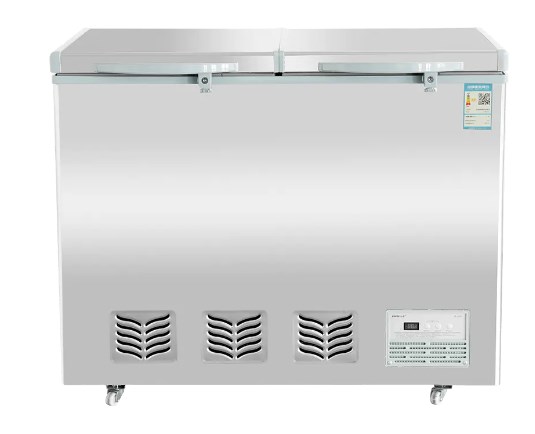
Kitchens that store frozen proteins and chilled vegetables in one area can replace two appliances with one dual-temperature chest freezer. Xingbao's double-door upright dual-temperature cabinet separates the compartments, which reduces defrost frequency and keeps each zone at its own setpoint.
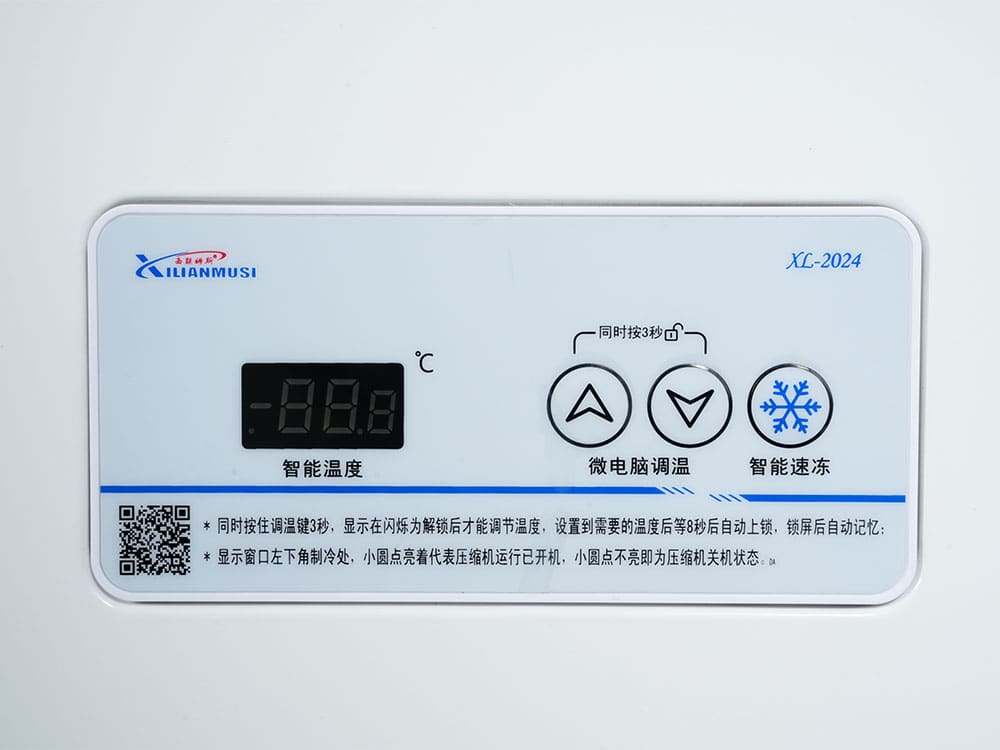 Double-Door Upright Dual-Temperature Standard FreezerWith separate temperature zones and a double-door design, this freezer provides organized storage for diverse ingredients, adaptable for use from small restaurants to community supermarkets.View Product →
Xingbao's in-house laboratory and 300,000-unit annual production capacity allow custom temperature ranges and cabinet dimensions to be validated before mass production.
To spec a unit against your floor plan and daily storage volume, contact the Xingbao sales team with your kitchen dimensions and menu volume.
Frequently Asked Questions
What size commercial chest freezer should a restaurant buy?
Count 60 to 80 liters of frozen storage per 100 covers, then add 25 percent for unusable volume. A restaurant doing 200 covers a day typically needs 500 to 700 liters of gross capacity; a bakery can start at 300 liters.
What temperature should a commercial chest freezer run at?
Store frozen food at -18°C or below. Commercial chest freezers are normally set between -21°C and -25°C to maintain a safety margin through defrost cycles and door openings, keeping product temperatures within food safety limits.
Can a household chest freezer be used in a commercial kitchen?
Not recommended. Household freezers use lighter-duty compressors rated for shorter daily runtime, lack the ambient temperature rating for hot kitchens, and recover slowly after frequent openings. Health and safety audits may also reject domestic equipment in commercial food preparation areas.
How much does a commercial chest freezer cost to run monthly?
At $0.15 per kWh, a 400-liter A+ chest freezer using roughly 300 kWh per year costs about $3.75 per month. A glass-door display freezer of the same volume runs near $8.40 per month under the same tariff.
Related News

Looking for Reliable Partner?
We are committed to becoming your most trusted partner.
Contact info.
 +86-153 0659 4509
 +86-(0)573-8796 5558
 zjxingbao@gmail.com
 No. 10 Baisha Road, Lianhang Development Zone, Chang'an Town, Haining City, Zhejiang China 314423
Mobile QR Code
Copyright © Zhejiang Xingbao Electrical Appliance Co., Ltd. All Rights Reserved. Custom Commercial Refrigerator Factory
