

 en
 English
 中文简体
 Español
 عربى
60 kg Ice Maker: Real Output, Specs, and Selection for Commercial Kitchens
 2026.11.25
 Industry News
A 40-seat restaurant serving 120 covers a day runs through 35-45 kg of ice before the dinner rush even starts. Most operators who buy a 60 kg ice maker expect the nameplate to mean 60 kg of usable ice every 24 hours. It does not.
Rated output is measured in a lab at 21°C ambient air and 10°C inlet water, on a clean evaporator. A working kitchen at 30°C ambient with 20°C tap water gets roughly 45-55 kg from the same machine, and that gap is predictable, not a defect. This guide covers what a 60 kg ice maker actually delivers in daily service, which specifications separate durable units from repeated service calls, and how to keep real output close to the rated number.
What a 60 kg Ice Maker Delivers in Real Kitchens
Count on 75-80% of rated daily output when you plan ice supply for a warm kitchen. A 60 kg machine typically produces 45-55 kg of usable ice across a full service day.
The rated figure assumes moderate ambient temperature, cold inlet water, and a clean evaporator. Rated output is the maximum production measured under a fixed test standard, not a promise of daily volume. Real kitchens deviate from every test condition: compressor cycling, condenser fouling, long water lines, and ice thickness settings all shift the actual number. The practical planning value is simple: take the rated output, multiply by 0.75 to 0.8, and size your ice supply from that result.
Storage capacity is a separate specification from daily output. A typical 60 kg unit has a bin that holds 20-30 kg, the yield of three to five production cycles. When the bin-full sensor trips, production stops until staff remove ice. If your peak demand hits in a two- or three-hour window, the bin, not the daily rating, decides whether you run out.
The freeze-harvest-refill sequence behind that cycling is worth understanding before you buy. The full breakdown of how commercial ice makers work explains where the 20-25% gap comes from and why batch size changes with room temperature.
The 75-80% rule: a 60 kg rated unit yields about 45-55 kg per day in a kitchen running above 28°C ambient.
Five Specifications That Decide Long-Term Performance
Condenser type, ice shape, bin capacity, compressor brand, and refrigerant choice matter more than any marketing number. Get these right and the machine works for years. Get them wrong and service calls start inside twelve months.
Build your shortlist around this comparison table, which shows the typical range for the 60 kg class and the reason each specification matters.
| Specification | Typical range (60 kg class) | Why it matters |
| Rated output | 55-65 kg/day | Lab condition; plan at 75-80% for a real kitchen |
| Storage bin | 20-30 kg | Sets surge capacity for short peak windows |
| Condenser | Air-cooled or water-cooled | Water holds output in hot rooms but uses water and needs a drain |
| Ice shape | Bullet, cube, or flake | Bullets and cubes suit drinks; flake suits food display |
| Refrigerant | R290, R134a, R404A | R290 offers lower GWP and newer efficiency levels |
| Power draw | 450-650 W | Drives circuit planning and running cost |
Water-cooled condensers hold production higher in kitchens above 32°C, but they consume water continuously and need a permanent drain connection. Air-cooled units are cheaper to specify and install, and their real output depends on ventilation and room temperature. In a confined equipment room, an air-cooled 60 kg machine can lose another 10-15% of output compared with the same unit in open space.
Planning rule: every 5°C rise above the 21°C test condition trims air-cooled ice output by roughly 8-12%. Position the machine as far from heat sources as your layout allows.
Where a 60 kg Ice Maker Fits and Where It Does Not
A 60 kg ice maker is correctly sized for a mid-size restaurant, specialty coffee shop, neighborhood bar, or small hotel kitchen serving 80-150 covers per day. It is under-powered for fast food, event catering, or a breakfast buffet that plates several hundred guests.
Daily ice demand follows venue type more than raw seat count. The chart below shows typical planning ranges for 24-hour ice use in common commercial settings, alongside the realistic daily yield of a 60 kg machine.
Daily ice demand vs. 60 kg realistic output
Fast food80-120 kg
Bar / lounge60-90 kg
Casual restaurant50-80 kg
Coffee shop40-60 kg
60 kg machine output45-55 kg
Read the chart as a planning envelope, not a guarantee. A coffee shop doing 300 specialty drinks a day can edge past 60 kg during summer iced-drink peaks, while a bar that serves ice only with spirits may stay under 40 kg. The 60 kg unit gives you a buffer for moderate peaks; it will not cover a sudden catering event stacked on top of normal service.
Installation and Ventilation: The Silent Output Killers
An air-cooled 60 kg ice maker needs 15-20 cm of clearance on its intake side and an ambient temperature below 32°C to hold the rated output. Skimp on ventilation and you lose more production to heat than to neglect.
- Location: keep the machine away from ovens, fryers, and direct sun. Every nearby heat source raises condenser intake temperature and lengthens the freeze cycle.
- Water supply: run a dedicated line with a filter sized for 4-8 grain hardness. Hard water deposits scale on the evaporator faster than any other failure factor.
- Drain: use a gravity drain with no trap and a clear fall. A trapped or kinked drain backs up into the bin and halts production.
- Leveling: set the unit level in both directions. An unlevel machine creates uneven water flow across the evaporator and produces thin, broken ice.
Keep the condenser coil at least 5 cm from the back wall and never stack boxes against the side louvers. Blocked airflow is the most common reason a 60 kg machine suddenly produces half its rated output.
A Maintenance Routine That Keeps Output Near Rated
Regular descaling is the difference between a 60 kg machine that still produces 50+ kg after two years and one that drifts down to 30 kg in eighteen months. Scale on the evaporator slows heat transfer, the freeze cycle lengthens, and daily yield falls.
| Frequency | Task | What it protects |
| Daily | Drain bin, rinse surfaces, inspect ice clarity | Ice quality, taste, and mold control |
| Weekly | Wipe bin interior, check water filter | Consistent ice size and flavor |
| Monthly | Descale evaporator with an approved cleaner | Evaporator efficiency and rated output |
| Quarterly | Replace filter, clean condenser fins, professional check | Compressor life and full production |
Use a cleaner approved for ice machines and flush the system twice after the cycle. Residual cleaner reaches the first batches of ice and creates a chemical taste that customers notice immediately. Log every cleaning on a wall chart; unsupervised "we clean it regularly" usually means "we cleaned it once."
The machines that fail early share one habit: nobody wrote down the last cleaning date.
What a 60 kg Ice Maker Built for Continuous Use Looks Like
The best 60 kg machine for a real business is the one whose construction matches its rating: a stainless steel bin liner, accessible condenser fins, a proven brand compressor, and a manufacturer that builds refrigeration equipment as its core business rather than rebadging imported parts.
Zhejiang Xingbao Electrical Appliance Co., Ltd. fits that profile. The company has spent 21 years in commercial refrigeration and operates two production bases with 300,000 units of annual capacity, and holds CCC, CE, and CFCC certifications. Its 60 kg model is built for daily foodservice duty, with a bin sized for commercial pacing and a condenser layout that assumes a working kitchen rather than a test lab.
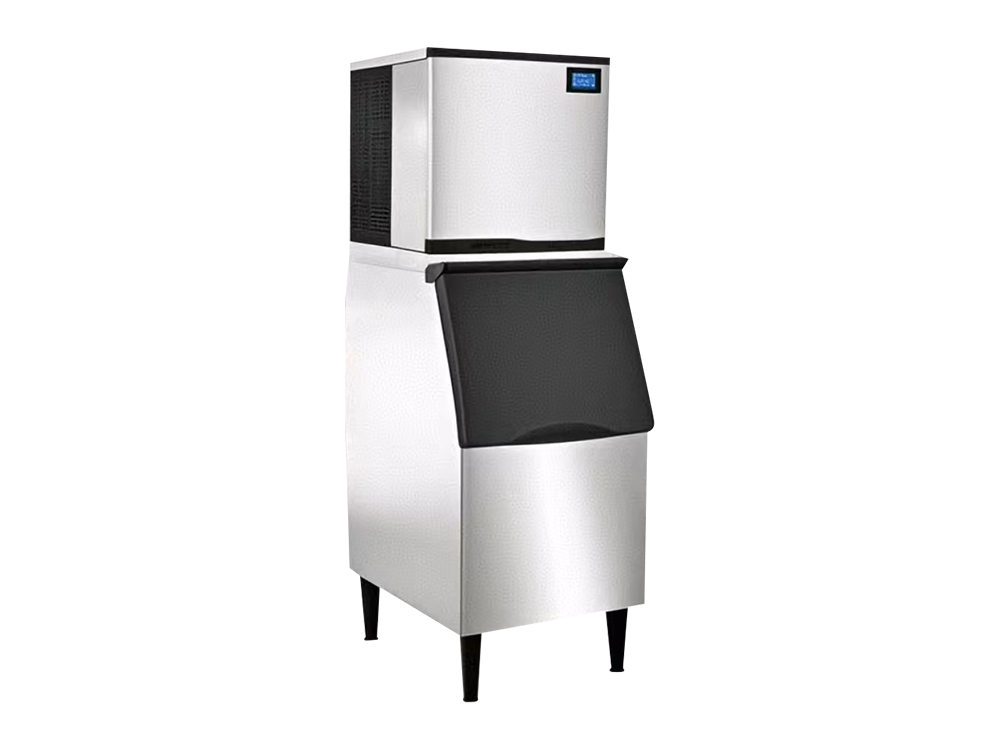 XB-60 Commercial 60 kg Ice Maker with Compact DesignThis 60 kg ice maker from a certified commercial refrigeration manufacturer suits daily foodservice use. Its compact footprint and stable output merit review, especially when verifying compressor quality and real production figures with the supplier.View Product →
Before you commit to any supplier, ask three questions: which compressor the machine carries, how many spare parts are stocked locally, and what the real production figure is at 30°C ambient. A supplier who answers with specifications rather than reassurance is the one to buy from. Compare the wider ice maker range on the product page before requesting a quote.
Frequently Asked Questions
How many drinks can a 60 kg ice maker support per day?
At 45-55 kg of realistic daily output, a 60 kg machine supports roughly 150-250 drink servings using 200-350 g of ice each, depending on portion size and any food display use. Watch the bin level during peak hours rather than the theoretical maximum.
How long does a 60 kg ice maker take to produce a batch?
Typical cycle time is 15-25 minutes per batch, with each cycle producing roughly 0.8-1.2 kg of ice at rated conditions. The storage bin reaches capacity after about six to eight hours of continuous production, assuming nobody is drawing ice during that period.
Can a 60 kg ice maker keep up in a hot kitchen with no air conditioning?
Output falls as ambient temperature rises. Above 35°C, plan for 35-45 kg per day from an air-cooled 60 kg unit. If the kitchen regularly exceeds that temperature, choose a water-cooled model or move the machine to a ventilated area.
Is a water filter worth the cost on a 60 kg ice maker?
In almost every case, yes. A carbon or inline sediment filter reduces scale and particles that lower output and give ice an off-taste. For water hardness above 150 mg/L calcium carbonate, a filter plus monthly descaling is the cheapest way to hold rated output.
Related News

Looking for Reliable Partner?
We are committed to becoming your most trusted partner.
Contact info.
 +86-153 0659 4509
 +86-(0)573-8796 5558
 zjxingbao@gmail.com
 No. 10 Baisha Road, Lianhang Development Zone, Chang'an Town, Haining City, Zhejiang China 314423
Mobile QR Code
Copyright © Zhejiang Xingbao Electrical Appliance Co., Ltd. All Rights Reserved. Custom Commercial Refrigerator Factory
