

 en
en  English
 中文简体
中文简体 Español
 عربى
عربىHow Does Catering Refrigeration Equipment Help Improve Service Quality in the Foodservice Industry?
 2026.01.01
 Industry News
In the modern foodservice industry, refrigeration equipment plays a crucial role. Whether it's a large restaurant, hotel, or small fast-food establishment, the preservation, storage, and transportation of food all depend on efficient refrigeration equipment. With the increasing demands for food safety and hygiene, catering refrigeration equipment is constantly developing and optimizing, becoming an indispensable part of the daily operations of foodservice businesses.
Types and Functions of Catering Refrigeration Equipment
Catering refrigeration equipment includes various types, mainly divided into refrigerators, freezers, refrigerated display cabinets, ice cream display cabinets, and refrigerated transport vehicles. These devices are suitable for different catering scenarios and play their unique roles.
Refrigerators and Freezers
Refrigerators and freezers are among the most common pieces of equipment, widely used for storing food ingredients. Refrigerators are typically used to store perishable foods such as vegetables, fruits, and meats, effectively extending their shelf life by maintaining a low-temperature environment. Freezers are often used to store meat, seafood, and other frozen foods for long-term storage. Freezers maintain a lower temperature, quickly freezing food and significantly reducing the rate of bacterial growth, thus ensuring food safety.
Refrigerated Display Cabinets
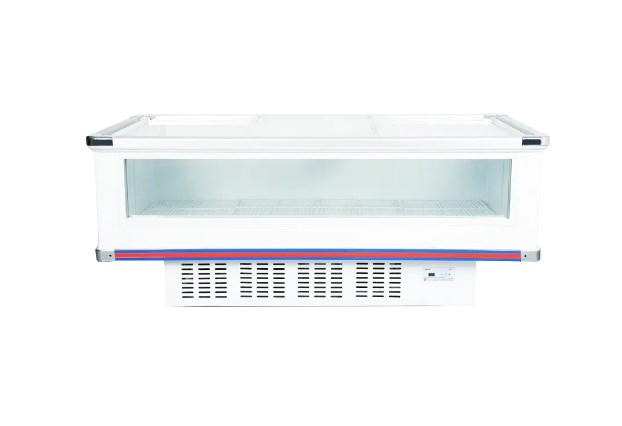
Another important type of equipment is the refrigerated display cabinet. These cabinets are often used in the front of foodservice establishments, both displaying the appearance of the food and ensuring its freshness. Refrigerated display cabinets are commonly found in supermarkets, fresh food stores, and various catering establishments. Their transparent design allows customers to directly observe the food, while the internal refrigeration technology effectively maintains the food's temperature, ensuring that the food does not spoil due to prolonged exposure to room temperature.
Ice Cream Display Cabinets
Ice cream display cabinets are refrigeration equipment specifically designed for displaying ice cream and other desserts. These display cabinets not only have preservation functions but also feature aesthetically pleasing designs. Through temperature and humidity control, they ensure the texture and appearance of ice cream and other frozen foods.
Working Principles of Catering Refrigeration Equipment
Although different types of refrigeration equipment have different working principles, the core principle is to lower the internal temperature of the equipment through a compression refrigeration cycle. The refrigerant circulates inside the refrigeration equipment through evaporation and condensation, thus removing heat and achieving the purpose of cooling. Most commercial refrigeration equipment uses compressors for cooling. This method works by mechanically compressing a refrigerant, converting it from a gaseous to a liquid state, and then releasing heat through an evaporator to maintain a low-temperature environment inside the refrigeration chamber.
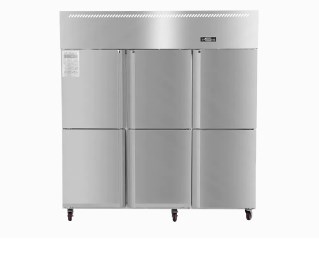
For equipment requiring a constant temperature (such as refrigerated display cases), a temperature control system is usually included to ensure the temperature inside the unit remains within the ideal range. The temperature control system continuously adjusts the compressor's operation based on the set temperature, ensuring that the internal temperature fluctuates within the set range and guaranteeing the safe storage of food.
How to Choose Suitable Commercial Refrigeration Equipment?
Choosing suitable refrigeration equipment requires considering not only its cooling performance but also evaluating its performance and suitability from multiple perspectives. The capacity of the equipment is a crucial factor. Based on the size of the restaurant and the daily food storage volume, choose a suitable capacity to ensure the equipment meets daily needs without wasting resources.
Energy consumption is another important factor. With increasing environmental awareness, many catering businesses are paying more attention to energy-efficient refrigeration equipment. High-efficiency and energy-saving equipment not only reduces operating costs but also meets increasingly stringent environmental requirements. Therefore, when purchasing, pay attention to the energy efficiency label and choose products with a higher energy efficiency ratio.
The durability of the equipment is also an important factor to consider. Commercial refrigeration equipment undergoes frequent opening and closing of doors and temperature fluctuations during daily use, so the material and manufacturing process directly affect its durability. Generally, equipment with a stainless steel casing has stronger corrosion resistance and a longer service life, making it more suitable for long-term, high-intensity use.
How to Ensure the Efficient Use of Commercial Refrigeration Equipment?
Although commercial refrigeration equipment is quite mature technologically, some reasonable management measures are still needed to maintain its long-term efficient operation. Regular cleaning and maintenance of the equipment are crucial. The refrigeration system and evaporator inside the refrigeration equipment are prone to dust accumulation, affecting the cooling effect. Therefore, the equipment should be cleaned regularly, and the refrigeration system should be checked for any blockages to ensure its normal operation.
Avoid overfilling the refrigeration equipment. Although the equipment has a large capacity, overfilling will affect air circulation and reduce the cooling effect. Therefore, when using the equipment, place food reasonably according to needs, avoiding overcrowding inside the unit. When using refrigeration equipment, try to avoid frequently opening and closing the doors, as each time the door is opened, the temperature rises, increasing the load on the equipment and thus increasing energy consumption. Properly planning the placement of food items to reduce unnecessary door openings can effectively extend the equipment's lifespan.
Frequently Asked Questions
1. What is the temperature setting range for refrigeration equipment?
The temperature range for refrigeration equipment is usually between 0°C and 8°C. This temperature effectively extends the shelf life of most foods. However, the specific temperature setting needs to be adjusted according to the storage requirements of different foods.
2. How is the energy efficiency of commercial refrigeration equipment evaluated?
To evaluate the energy efficiency of commercial refrigeration equipment, you can refer to its energy efficiency rating. Equipment with a higher energy efficiency rating usually provides good cooling performance with lower energy consumption. You can check the energy efficiency label of the equipment and choose products that meet energy-saving requirements.
3. How to extend the lifespan of refrigeration equipment?
Regular cleaning and maintenance of the equipment are essential to ensure that the internal ventilation and cooling systems are functioning properly. Avoid overuse and frequent opening and closing of the doors to reduce the load on the equipment and extend its lifespan.
4. What types of food can be stored in commercial refrigeration equipment?
Commercial refrigeration equipment is usually suitable for storing perishable foods such as meat, seafood, vegetables, fruits, and dairy products. Different types of equipment can be chosen according to the nature of the food; for example, freezers are suitable for storing frozen foods, and refrigerators are suitable for storing fresh foods.
5. Is refrigeration equipment noisy?
High-quality refrigeration equipment is usually well-designed and operates with low noise levels. When choosing equipment, you can check the product's noise specifications and select equipment with lower noise levels to minimize the impact on the restaurant environment.
Related News

Looking for Reliable Partner?
We are committed to becoming your most trusted partner.
Contact info.
 +86-153 0659 4509
 +86-(0)573-8796 5558
 zjxingbao@gmail.com
 No. 10 Baisha Road, Lianhang Development Zone, Chang'an Town, Haining City, Zhejiang China 314423
Mobile QR Code
Copyright © Zhejiang Xingbao Electrical Appliance Co., Ltd. All Rights Reserved. Custom Commercial Refrigerator Factory
